

Starting over in a different country is an adventure full of dreams and challenges. If you're thinking of Spain as your next destination, One of the first and most important questions you'll ask yourself is which cities in Spain are the best places to live.
When it comes to choosing where to live, there’s no single answer, because it all depends on the circumstances and needs of the person making the decision. In addition to looking at what the rankings say, we’ll go a step further with a guide to key factors, since in Curiara We know that surely You'll come to appreciate cities that don't show up in the surveys but are a better fit for what you're looking for: a place where you can grow, feel like part of a community, and build a prosperous future.
What do the rankings say about the best cities to live in Spain?
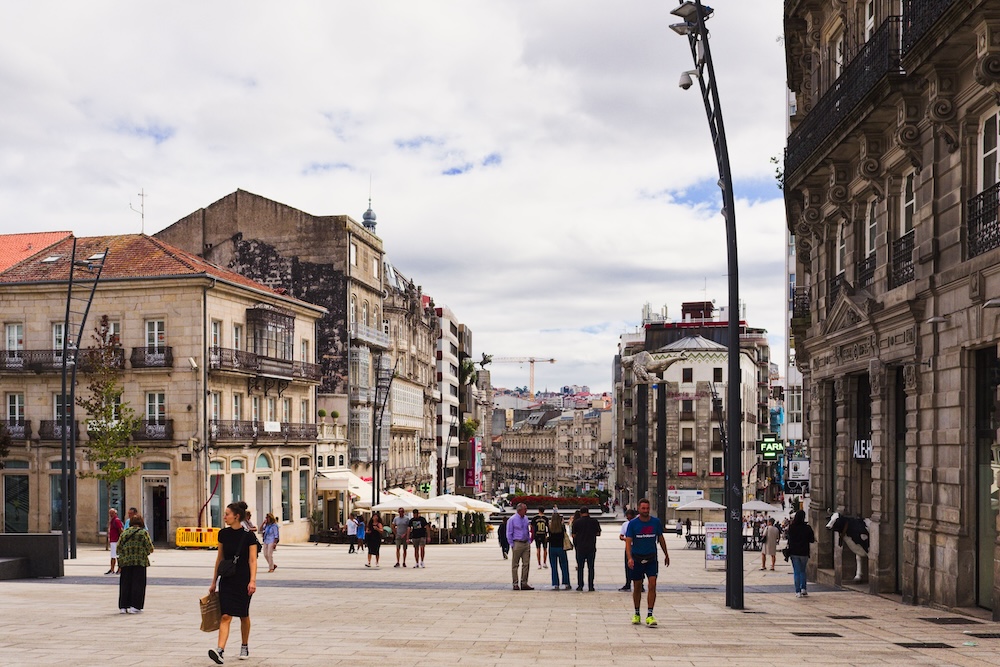
Depending on which ranking you look at, The answer to the question about the best cities in Spain varies, since they examine various factors:
Cities with the Highest Quality of Life
The Organization of Consumers and Users (OCU) It surveyed nearly 3,000 residents of Spain’s 15 largest cities on ten aspects of their daily lives: mobility, safety, healthcare, education, cultural offerings, the environment, the job market, cost of living, housing, and urban cleanliness. The results surprised many: Vigo topped the ranking for perceived quality of life with 70 points, followed by Zaragoza and Bilbao with 69, Valladolid and Córdoba with 68, Málaga (66), and Valencia and Gijón with 65. Barcelona and Madrid were relegated to the bottom of the list, with 56 and 55 points, respectively, penalized by the cost of living and perceptions of insecurity.
The OCU survey was conducted during the COVID-19 pandemic. However, Vigo continues to be recognized for its quality of life in a ranking that has just been published: the Oxford Economics' Global Cities Index 2026 This ranks it among the top 100 cities in the world, surpassed only by another city… also in Galicia! A Coruña ranks 68th and Vigo, 83rd. Both rank higher than Barcelona, which is 88th globally, and Bilbao, also ranked among the top 100 cities out of the 1,000 analyzed, at 93rd. Other Spanish cities that stand out in the ranking are Madrid (101), Valladolid (108), Palma de Mallorca (109), Las Palmas (115), and Málaga (124).
The other categories in the ranking are: Economy, Human Capital, Governance, and Environment, in which Santa Cruz de Tenerife makes it into the top 10 (8th place). Globally—that is, when combining data from all categories—Madrid is the highest-ranked Spanish city, at number 30, followed by Barcelona (72) and Valencia (180).
Top Cities to Settle In
From a very different perspective—that of those arriving from outside—the InterNations' Expat Insider / Expat City Ranking 2024 —based on a survey of more than 12,000 expatriates in nearly 50 cities around the world—ranked Valencia, Málaga, and Alicante among the top three cities worldwide for the second consecutive year, highlighting their quality of life, ease of settling in, and personal financial management.
More Competitive and Sustainable Cities
Finally, the Cities in Motion 2026 Index, compiled by the IESE Business School, It analyzes 183 cities in 92 countries across ten dimensions—including the economy, governance, mobility, technology, and the environment, among others. The major capitals stand out here: Madrid makes it into the top 20, ranking 15th, followed by Barcelona at 24th.
Other Spanish cities in the ranking are: Valencia (72nd), Málaga (88th), and Seville, which ranks 99th. Just outside the top 100 are: Palma (102), Bilbao (106), Zaragoza (107), A Coruña (109), and Murcia (121).
As you can see, each ranking measures something different and uses a different methodology (surveys, macroeconomic data analysis, etc.), which is why the results vary so much depending on which one you consult. None of them has the final say. Beyond any single study or ranking, we suggest a A guide to key objective factors that we recommend you consider when evaluating the best cities to live in Spain.
What makes a city «the best» place to live? Key factors

For When deciding which city to live in, it is crucial to understand what factors define the quality of life there. For migrants, these factors may carry even greater weight, as they directly affect their ability to adapt and their well-being.
1. Cost of living: Your budget matters
This is, without a doubt, one of the most decisive factors. The cost of living in Spain varies greatly from one region to another. Here we include:
- Housing. Rent or buy. Major capital cities such as Madrid y Barcelona have the highest prices, while medium-sized or small cities offer more affordable options.
- Food. Prices at supermarkets and local markets.
- Basic Services. Electricity, water, gas, Internet.
- Leisure and Culture. Restaurant prices, tickets to shows, sports activities.
A lower cost of living can mean more money to save and less financial pressure, which helps ensure stability as you start your new life. We recommend checking out the Consumer Price Index (CPI) by autonomous community on the INE (National Institute of Statistics) website and the Ministry of Housing’s rental statistics portal to find out the average prices of rental housing.
2. Job Opportunities: The Engine of Your Progress
Finding a job is essential to getting settled. The best cities to live in Spain are usually those with a dynamic job market and a greater number of job openings, especially in specific sectors.
- Unemployment rate. A key indicator of the city's economic health.
- Average Salaries. When it comes to the cost of living, a high salary in an expensive city may not be as advantageous as an average salary in a more affordable city.
- Entrepreneurship. Resources and ecosystems to help you start your own business.
The INE provides the figures for average wages in each Autonomous Community; the SEPE (State Public Employment Service), unemployment statistics, But it's difficult to extract and interpret the data, so you can turn to the business newspaper Expansion, which provides up-to-date unemployment data by municipality in the “Macro Data” section of its website.
It is also important to investigate the opportunities in your professional field and consider whether your skills are in demand in the city you're interested in. To do this, check the business press and the employment and entrepreneurship services on the websites of the city governments of the cities you're considering.
3. Quality of Life: Beyond the Material
This factor encompasses aspects that contribute to your daily well-being and happiness:
- Security. Crime rates, sense of safety on the streets.
- Health. Access to quality public and private health care services.
- Pollution. Air quality and noise levels.
- Education. Educational opportunities for you or your children, from daycare centers to universities.
- Leisure and Culture. Museums, theaters, movie theaters, nightlife, festivals, cuisine.
- Green spaces and outdoor areas. Parks, gardens, proximity to nature.
Spain is located among the 30 safest countries in the world, According to the 2026 Global Peace Index, however, if this factor is a deciding factor for you, you can consult the Ministry of the Interior’s Crime Statistics Portal, which breaks down the results by autonomous community. If you’re concerned about pollution, the air quality It is monitored through a national network of more than 600 monitoring stations, whose real-time data can be accessed on the Ministry of Ecological Transition's website.
As for the Health Care, is decentralized, and investment in public health varies widely among the autonomous communities, according to the report Health Care Spending in Spain: Analysis and Recommendations developed by the Galician Economic Forum. Keep this in mind and do your research before making a decision. Regarding the local services, Checking the town websites will help you get an idea if you're wondering How to Choose a School Or do you want to explore the city's green spaces, its cultural offerings, etc.?.
4. Climate and Natural Environment: Enjoying Everyday Life
Spain is a country with great climatic diversity. From the oceanic climate of the north to the Mediterranean climate of the south, and the continental climate of the interior.
- Hours of sunshinel. Spain is famous for its good weather, but not all regions get the same amount of sunshine.
- Temperatures. Mild or cold winters, hot or mild summers.
- Proximity to the beach or the mountains. For nature lovers and outdoor sports enthusiasts.
The weather can have a significant impact on your mood and the activities you can enjoy, making it an important factor in deciding where to live in Spain if you prioritize good weather or nature. You can check out the weather section of the Atlas of the National Geographic Institute to find out the average temperatures in the areas you're interested in. In addition, the AEMET provides information on normal climate values at the municipal level.
5. Connectivity and Transportation: Unlimited Mobility
The ability to get around the city and connect with other cities or countries is vital.
- Public transportation. Bus, subway, streetcar, and commuter rail networks.
- Airports. Proximity to airports with good domestic and international connections.
- Infrastructure. Quality of roads and highways.
A good transportation network makes it easier to get to work, school, and recreational activities. Check the National Atlas to learn about the infrastructure network, and visit the websites of local governments and metropolitan transit agencies for more details on local services.
6. Social Integration and Community: Feeling at Home
For migrants, a key factor is how easily they can integrate into society and find a supportive community.
- Cultural diversity. Cities with a multicultural population tend to be more open and welcoming.
- Associations and groups. Opportunities to join interest groups, migrant associations, or community activities.
- Language. Although Spanish is the official language, some autonomous communities have co-official languages (Catalan, Valencian, Galician, and Basque) that may require some extra effort.
Feeling included and surrounded by people who share your interests or background is key to lasting emotional well-being. The Demographics section of the National Geographic Institute’s Atlas will give you an idea of the areas that have traditionally been destinations for immigration. The INE Continuous Population Statistics provides up-to-date statistics on migrants by province.
In addition to the integration options, there are Other factors that migrants should consider when deciding on the best city to live in Spain: the presence of family members, the ease of registering as a resident and accessing services, the availability of immigration offices and support services, as well as a factor as fundamental as proximity to flight connections to Latin America.
Finding the Best Place to Live in Spain: Your Decision, Your Journey

In short, when it comes to making a choice, What matters are your priorities, whichever is more relevant to you:
- If you prioritize job opportunities: major cities like Madrid or Barcelona.
- If you prioritize quality of life and relative cost: Valencia, Zaragoza, or medium-sized cities.
- If you work remotely and are looking for a great climate and lifestyle: Málaga, Alicante, or Valencia.
- If you prioritize more affordable housing and a peaceful lifestyle: explore medium-sized cities outside the major metropolitan areas.
In this table, we summarize the official sources we recommend consulting to explore The best cities to live in Spain, based on your own criteria. Follow the guide to tailor your search to your specific situation and find the place that best suits your needs.
| INE | Consumer Price Index. Indices by Autonomous Community. |
| Wage Distribution: Averages and Percentiles by Gender and Autonomous Community. | |
| Average Wages by Type of Work Schedule, Autonomous Community, and Decile. | |
| Continuous Population Statistics. Results | |
| Ministry of Housing | Rental Statistics Portal |
| SEPE | Statistics by Municipality (Registered Unemployment and Contracts) |
| Ministry of the Interior | Crime Statistics Portal |
| Ministry of Ecological Transition | Air Quality |
| AEMET | Normal Climate Values |
| National Geographic Institute | National Atlas |
Here at Curiara, we encourage you to thoroughly research each option and Go beyond the official figures and directories: If possible, visit the cities that appeal to you the most, and talk to people who already live there. Choosing a city isn't about finding the best one on paper, but rather the one that best fits your job, your budget, your family, and the life you want to build. With the right information, you'll make the best decision for your future.
Sources consulted
- OCU: Quality of Life in Spanish Cities 2020–2021
- Oxford Economics: 2026 Global Cities Index (Quality of Life)
- InterNations: Expat City Ranking 2024
- IESE: Europe and Asia lead the IESE Cities in Motion 2026 Index, a ranking that recognizes sustainable urban development
- INE. INEbase
- National Geographic Institute. Atlas
- Expansión. Macroeconomic Data. Unemployment by Municipality
- Global Peace Index 2026
- Healthcare. The gap in per-capita healthcare spending among the autonomous communities reaches 40%