
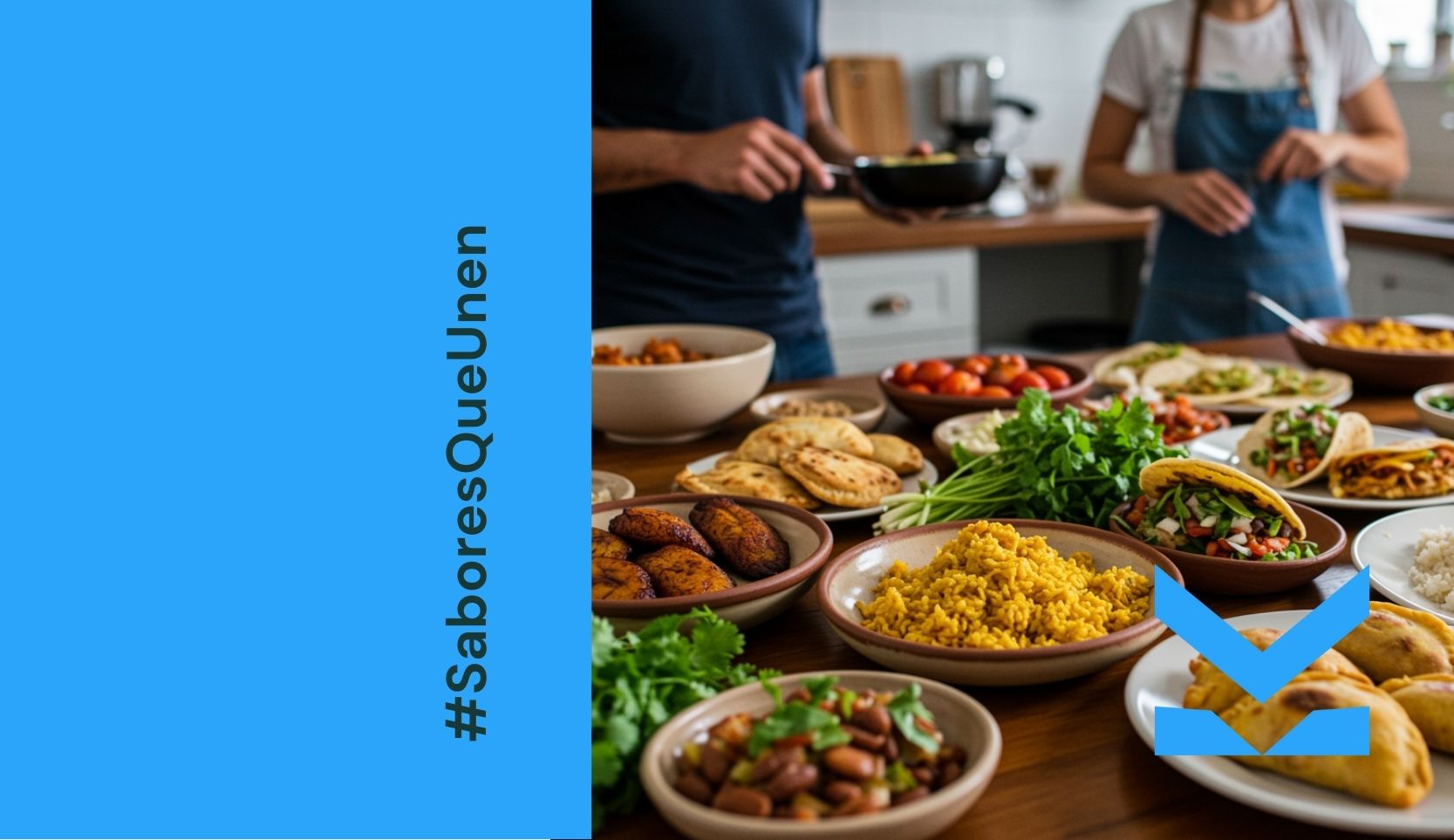
The latin cuisine is much more than a collection of traditional recipes.
It is a system of practical knowledge, inherited gestures and everyday solutions that, for generations, have been used for nurture, protect and accompany.
In every technique, ingredient and way of preparing food there is a reason that goes beyond taste: to take care of the body, support the family and maintain balance in daily life.
At Latin America, Cooking has never been just a matter of hunger. Food appears when someone is sick, when there is a need to gather strength, when there is a celebration or when comfort is needed.
Behind every dish there is a practical logic, to take advantage of ingredients, to preserve food, to facilitate digestion and, at the same time, a deep emotional charge: the certainty that the food is not only good for the body but also for the soul. feeding is also a way of loving.
In this article we will see some curiosities of the latin cuisine to understand why many of their techniques and preparations are still valid today. Because in their flavors there is not only tradition, but also care, memory and a very particular way of being present to others.
Latin cooking techniques that were born to take care of the body
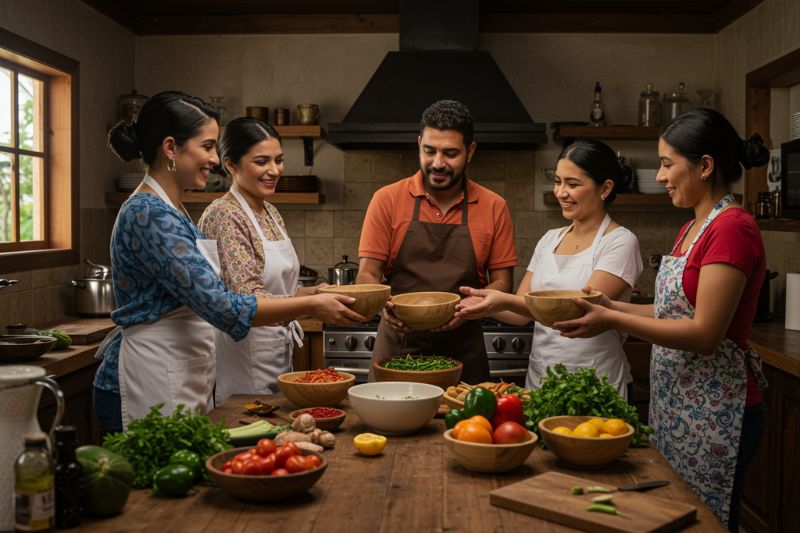
Many techniques of the latin cuisine emerged as practical responses to everyday life and are still relevant today in U.S. Latino households. They were not born out of fashion, but out of necessity: to harness resources, facilitate digestion and provide real energy.
One of them is the slow cooking. Stews, soups and broths allow to soften ingredients, concentrate nutrients and create easy-to-digest dishes.
In many Latino households in the U.S.. these dishes continue to appear when someone is tired, sick or needs to regain strength.
Another key technique is the use of sofritos and aromatic bases. Sautéing onion, garlic, chili or tomato at the beginning not only adds flavor, but also helps to activate the ingredients, to make them more assimilables and to create dishes that are comforting from the first aroma.
There is also the custom of boil before frying or grilling, a traditional way of taking care of the body, reducing hardness and facilitating the preparation with less effort. Simple techniques that today, even in modern kitchens of United States, The new system still works the same way.
These ways of cooking explain why many Latin dishes feel “home”They are not only filling, but also soothing. They are recipes designed to support the body on a daily basis, something especially valuable when we are far from the familiar.
Latin ingredients that work as daily care
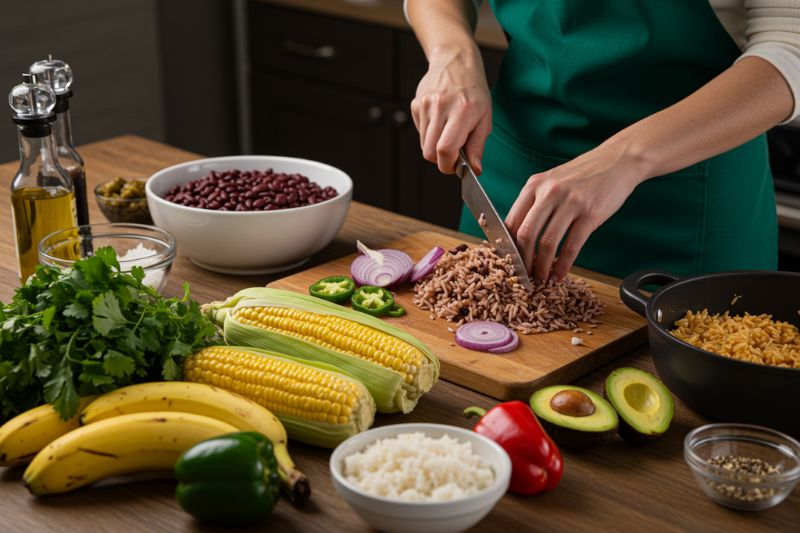
In the latin cuisine, Many ingredients are chosen not only for taste, but also for what they contribute to the body.
Arriving at United States, we learned to look for them in latin supermarkets, We have learned to replace them when they were not available and to keep them as part of our daily routine because we know what they do for us.
The corn, for example, is the basis of many latin american cuisines. It provides sustained energy, is easy to digest and adapts to multiple preparations. At tortillas, arepas, tamales o soups, is still a food that sustains long working days.
The legumes like beans, lentils and chickpeass play a fundamental role. They are inexpensive, high-yielding and nutritious, which is why they appear frequently in Latino households in the U.S. They don't just nourish: they help us stay strong when budgets are tight and the body needs consistency.
The roots and tubers such as cassava, potato and sweet potato also have a clear function. They are satiating, versatile and easy to combine. At contexts migratory, In a country where people sometimes eat quickly or at irregular times, these ingredients help to maintain balance.
And there are the herbs and spices, used with intent. Cilantro, bay leaf, cumin, oregano or chili bell pepper not only add identity to the dish, they also facilitate the digestion, stimulate the appetite and make the food comforting without the need for excess.
These ingredients are still present because they fulfill their function. In the latin cuisine, nothing is there by chance: every element has a practical reason which, over time, becomes custom and care.
Conservation methods that were born to protect and yield
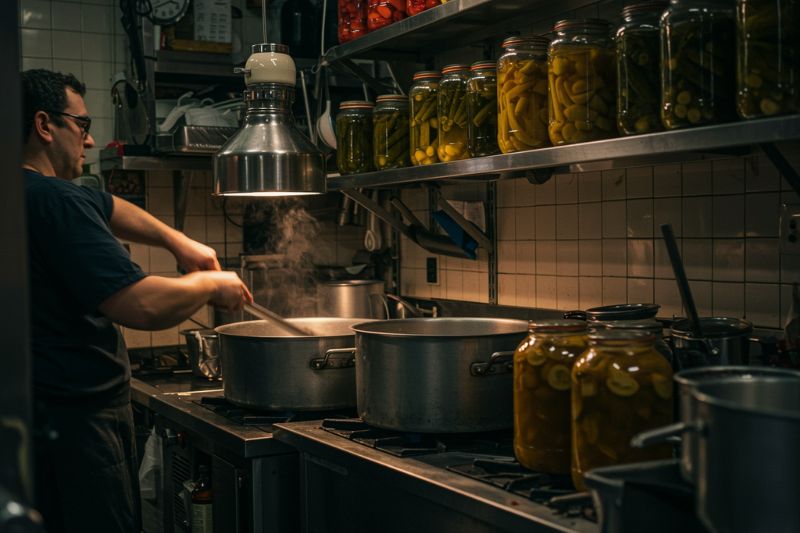
In the Latin cuisine, conserving food has always been a way to anticipate shortages, to save time and to ensure food for more days.
These practices have traveled with us and are still present in many countries today. Latino households away from home, adapted to new rhythms but with the same purpose.
One of the most common is cooking in quantity. Prepare large pots of rice, beans or casseroles not only saves time: it ensures that food is ready after long days of work. It's a quiet way to take care of ourselves when fatigue leaves no room for improvisation.
There is also conscious reheating. Many Latin dishes are designed to improve over time.
By resting, the flavors are integrated and the food becomes more comforting. This is no coincidence: it makes it possible to take better advantage of each preparation without losing quality.
Conservation in salt, vinegar or oil, present in pickles, marinades y sauces, The same logic applies. They are simple methods that prolong the shelf life of foodstuffs and provide flavor, which is especially useful when certain ingredients are not always available.
Even the custom of save broths or bases for future meals has a clear practical sense. It allows to transform leftovers into new dishes and avoid waste, a teaching that is still valid in migratory contexts where every resource counts.
These methods were not born not out of convenience, but out of the care. These are inherited strategies that help us to sustain ourselves today, when time is limited and stability is built day by day.
Latino cuisine in the United States: places, encounters and dates that sustain us.
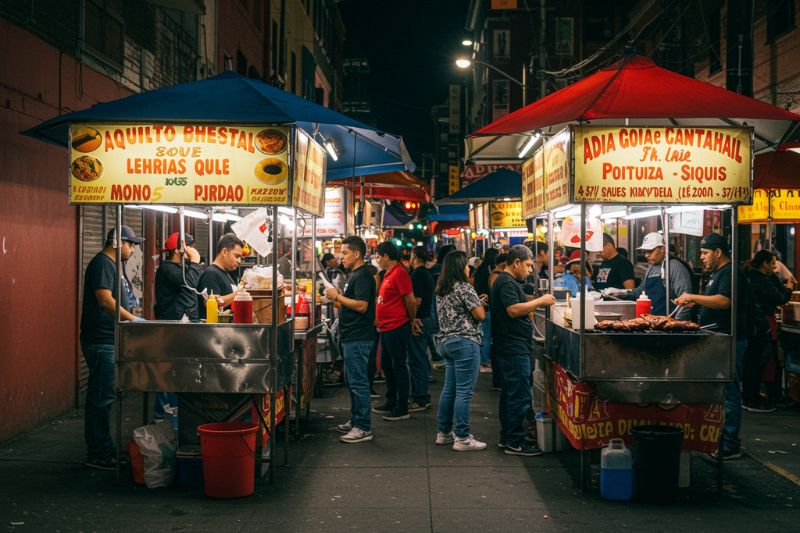
At United Statesthe latin cuisine not only lives inside the home. It is also expressed in public spaces that have become meeting points, emotional refuge and constant reminders of who we are.
In cities such as Los Angeles, Miami, Houston, New York or Chicago., Latino neighborhoods are full of stalls, family restaurants and markets where food has a clear function: to bring people together.
Taquerias open late, bakeries that smell like childhood, food trucks that show up after work. They are not just businesses: they are places where we recognize ourselves.
Many of these spaces become especially important in key dates. During celebrations such as the Cinco de Mayothe Hispanic Heritage Monththe Day of the Deadthe patronal feasts or the latin cultural festivals, food takes center stage. It is not only sold or consumed: it is shared.
It's a way of saying “we're still here” in a fast-moving country.
There are also the community events, Gastronomic fairs, meetings in churches, associations or squares, where someone cooks for many. Big pots, long tables, recipes that pass from hand to hand. In these moments, the latin cuisine fulfills another care function: creating community in a place where loneliness sometimes weighs heavy.
Even small rituals, such as buying bread on a Sunday, eating a typical meal after work, even getting together to watch a game, work like emotional anchors. They are pauses that give us back something familiar in the midst of a demanding routine.
When nurturing is also a way of loving
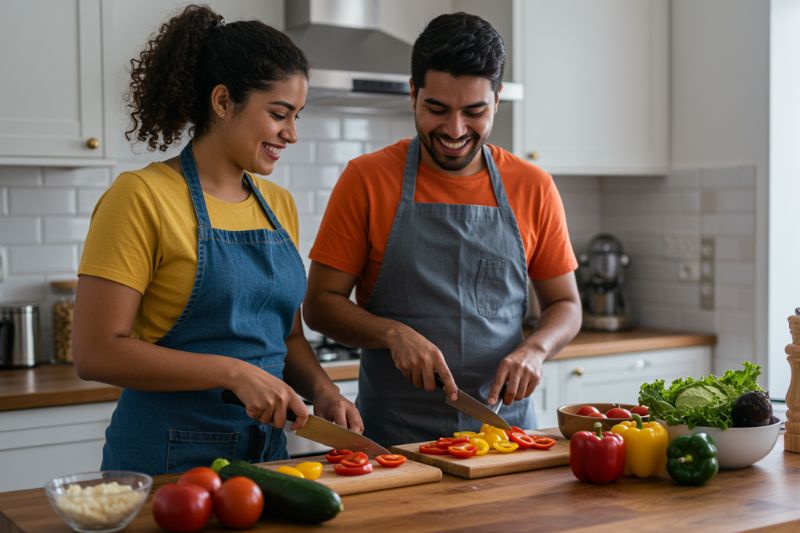
In the latin cuisine, Many recipes are not only explained by ingredients or techniques, but by intention. We cook for someone to come home and eat hot. For the body to hold out. So that the day ends a little better than it began. That gesture, repeated over and over again, is a concrete form of care.
Far from our countries of origin, this intention is not lost. It adapts. Supermarkets, schedules and rhythms change, but the logic remains the same: using food to sustain us.
A plate prepared with time, a recipe that repeats itself even if the ingredients are not identical, a taste that soothes when everything else is new.
Many times we are not aware of it, but when we cook as we were taught, we are transmitting more than just tradition. We are creating continuity. We are saying that, even in different contexts, we continue to care in the same way.
Latin cuisine reveals something simple and profound at the same time: nourishment is not just meeting a physical need. It is to accompany, protect, connect and be present.
And maybe that's why, when we eat something that reminds us of home, we don't just feel full. We feel relief.
At Curiara, We believe that care is expressed in many ways. Sometimes in a delivery, sometimes in a call, and many times in a shared dish.
The latin cuisine reminds us that nurturing is also a way of loving, of accompanying on a daily basis and of sustaining bonds even at a distance.
We continue to connect stories, cultures and gestures that care. Because in the end, in the kitchen as in life, the important thing is that what is essential arrives well.