

Moving to a new country means making many important decisions in a short amount of time. Finding a place to live, getting a job, registering with the local government, figuring out how everything works. And among those first steps, there’s one that often becomes urgent very quickly: Open a bank account.
Because living in Spain without a bank account can complicate everyday tasks such as get paid, pay rent, or shop online. And when you're just starting the immigration process, often the only document you have is your passport. The good news is that yes, It is legal to open a bank account in Spain with a passport.. Although the conditions vary depending on the bank and your immigration status, there are options for non-resident foreigners or those who are still by getting their paperwork in order.
Can you open a bank account with a passport in Spain?
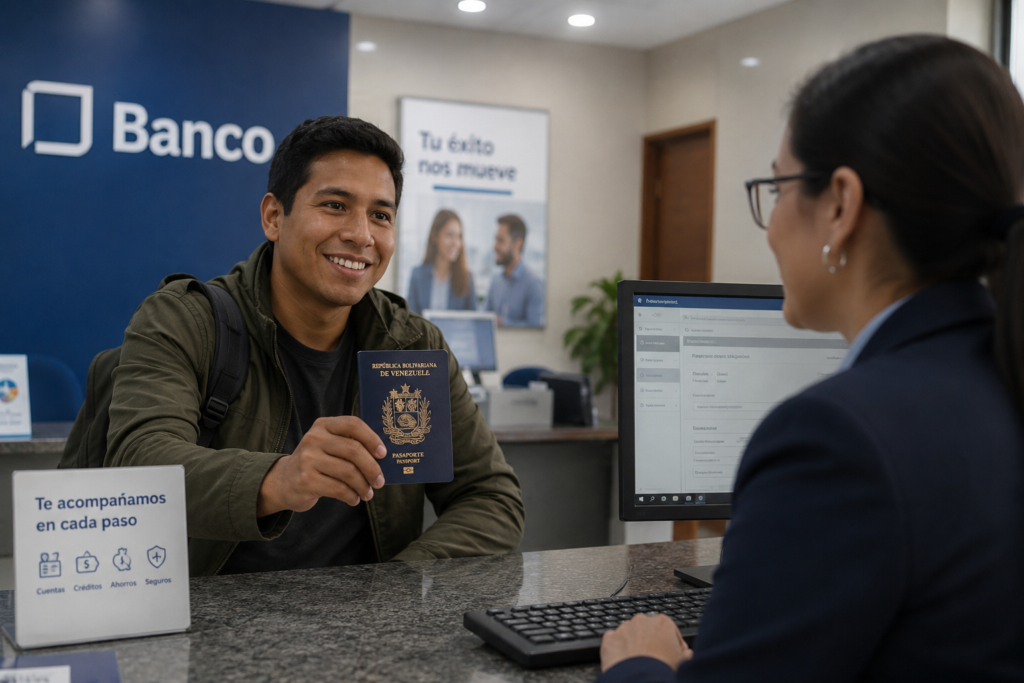
When someone arrives in Spain without an NIE or a residence permit, it’s natural to assume that opening a bank account will be difficult. In some cases, it’s possible to start the process using a valid passport, but in practice, most banks usually require additional documentation.
Typically, to open a nonresident account, the bank requests a passport and a non-resident certificate. In addition, according to the agency, it may also request other documents to verify the person's identity, the source of the funds, or the person's status in Spain.
Typically, these types of accounts are intended for:
- Newly Arrived Foreigners
- Nonresidents
- International Students
- People who don't yet have NIE or TIE
That's right, Each bank has its own requirements and may request additional documentation to verify your identity or your status in Spain.
What You Need to Open a Bank Account with a Passport
Before starting the process, it’s important to know what documents banks typically request. Having this information clear can help you save time and avoid unnecessary trips. Although requirements may vary by bank, they usually ask for:
- Valid passport
- Spanish or international phone number
- E-mail address
- Document proving your address
- In some cases, a non-resident certificate
In addition, some agencies may also request additional documentation to verify your personal or financial situation, such as an employment contract, proof of enrollment in school, or proof of income. Many people begin these procedures while they are still looking for housing, trying to find a job, or adjusting to a new city. That is why, Having your documents ready from the start can give you greater peace of mind and stability during your first few weeks in Spain.
What is a nonresident certificate?

One of the documents that some banks require is a non-resident certificate. This requirement often raises questions, especially among people who have just arrived in Spain.
The non-resident certificate is a document that certifies that you are still You are not an official resident of Spain. It is issued by the National Police, and you can also request it through the appropriate Spanish consulate if you are still in your home country.
In practice, some banks require this when a foreign national wants to open a bank account using a passport and does not yet have an NIE or TIE. It is valid for 3 months, and the approximate cost is €7.31 if you apply for it directly. If the bank handles the process for you, the cost is typically between €15 and €30, depending on the bank.
In addition, as long as the nonresident account remains active, the bank must update this certification periodically, usually every two years.
Step-by-Step Guide to Opening a Bank Account with a Passport
Although it may seem like a complicated process at first, opening a bank account in Spain is usually quite quick if you already have the necessary documentation ready. In many cases, it can even be done online, although some banks may require you to visit a branch in person to complete the verification process. .
Step 1: Choose a bank that allows accounts for passport holders
Not all banks offer the same services to foreign nationals.
Therefore, it is a good idea to review:
- If they accept a passport as the primary form of identification
- If they allow you to open an account without an NIE
- What fees do they charge?
- Whether the process can be done online or requires a visit to an office
Some financial institutions, such as Santander, BBVA, CaixaBank, and Openbank, offer options for open accounts for foreign nationals or nonresidents. In the case of Santander and CaixaBank, the process can be started online from several countries, while BBVA usually requires customers to visit a branch to complete the process. Openbank also allows customers to complete the process digitally, although the required documentation may vary depending on the situation.
Step 2: Prepare the documentation
Once you've chosen a bank, the next step is to gather all the necessary documents. You'll typically need to have a valid passport on hand and, in many cases, a non-resident certificate. Depending on the bank, they may also ask you for other documents to verify your address, your financial activity, or the source of your funds. Although it may seem like a minor detail, Keeping your paperwork organized can make a big difference when you're starting a new chapter far from home.
Step 3: Complete the identity verification process
The bank will review your documents and verify your identity.
If you're applying online, you'll usually need to upload a photo of your passport, confirm some personal information, and complete a digital verification. If the bank requires you to visit in person, you'll need to go to a branch to complete the process.
Step 4: Activate the bank account
Once your application is approved, you'll be able to use your account to:
- Receive transfers
- Make Payments
- Set up automatic bill payments
- Managing Your Expenses in Spain
Difference Between an Account for Residents and Non-Residents
When you start researching banking options in Spain, you’ll often come across accounts for residents and accounts for non-residents. Although they may seem similar, there are some important differences.
The main difference is usually in the documents requested by the bank, the fees charged, and some services associated with each type of account.
Once you obtain your NIE or regularize your status, many banks allow you to convert your non-resident account into a standard account.
Tips Before Opening a Bank Account in Spain

Choosing a bank account isn't just a matter of completing a quick formality. It also involves thinking about how you're going to organize your new life in Spain and which options will be most helpful to you in your day-to-day life. Before choosing a bank, consider the following:
- Maintenance fees
- If a card is included
- International Transfers
- Service in Your Language
- Requirements for keeping the account active
If you need to send money to your family or continue supporting loved ones back home, pay close attention to international transfers, fees, and the exchange rate applied. In such cases, having a specialized solution like Curiara It can help you send money more easily, securely, and transparently.
Sometimes, the most important thing isn't just opening an account quickly, but finding an option that truly supports you as you start this new chapter in Spain.
Because migrating also means learning to build stability little by little. And although many administrative procedures may seem cold or bureaucratic, behind each one there is something much more human: the desire to move forward, take care of your loved ones, and remain a part of their lives, even from afar.
Sources Consulted
- Non-Resident Certificate: National Police Online Portal, “Non-Resident Certificate” procedure, Form EX-15, and Fee Form 790, Code 012.
- Non-resident account for passport holders: Banco Santander, “Online Account for Non-Residents with Passports.”.
- Bank accounts for foreigners with a passport: BBVA, information on opening a bank account with a passport and opening an account in Spain for foreigners.
- Accounts for Foreigners and Non-Residents: CaixaBank, information on opening accounts for foreigners and requirements for non-residents.
- Bank Account with a Passport: Openbank, a guide on how to open a bank account with a passport.
- Banking Procedures for Foreigners Without an NIE or TIE: Public information from Santander, BBVA, CaixaBank, and Openbank regarding documentation, identity verification, and account-opening processes—both online and in-person.