

Do you know the Changes to the regulations on social integration? In this article, we'll explain the main Requirements for applying in 2026. The most important change for you: with the new Immigration Regulations (Royal Decree 1155/2024, dated November 19), The required length of service was reduced from three to two years. This is excellent news that brings you one step closer to regularizing your status. Subsequently, the regulation approved by the extraordinary regularization process (Royal Decree 316/2026, dated April 14) specified certain aspects that facilitate the processing and verification of social integration. Let’s take a closer look.
What are social ties, and why are they so important?

Social ties is a legal concept that allows non-EU citizens to obtain a residence permit on the grounds of social ties due to exceptional circumstances, demonstrating effective integration into Spanish society after a period of continuous residence.
For the immigrant community, this permit marks a turning point: it allows individuals to resolve their undocumented status by granting a temporary residence and work permit in Spain for one year, renewable for an additional year, as explained in the FAQs published by the Ministry of Inclusion, Social Security, and Migration upon the approval of the new Immigration Regulations.
Before beginning the social ties application process, make sure you are not eligible for a residence permit because of other ways to put down roots that best suit your situation among those introduced by the Regulation. For example, you can apply for family ties directly, without waiting two years, if you have children or are the guardian of minors who are nationals of a country in the European Union, the European Economic Area, or Switzerland.
The Pillars of Social Integration
Immigration attorney Eva Pereira summarizes the following in these four pillars: Requirements for applying for social ties:
- Continuous residence in Spain for at least two years.
- Have no criminal record in Spain or in any previous countries of residence.
- Family ties or a social integration report that demonstrates your ties to the community.
- Sufficient financial resources to ensure your livelihood.
Continuous Residence in Spain: The Time Factor
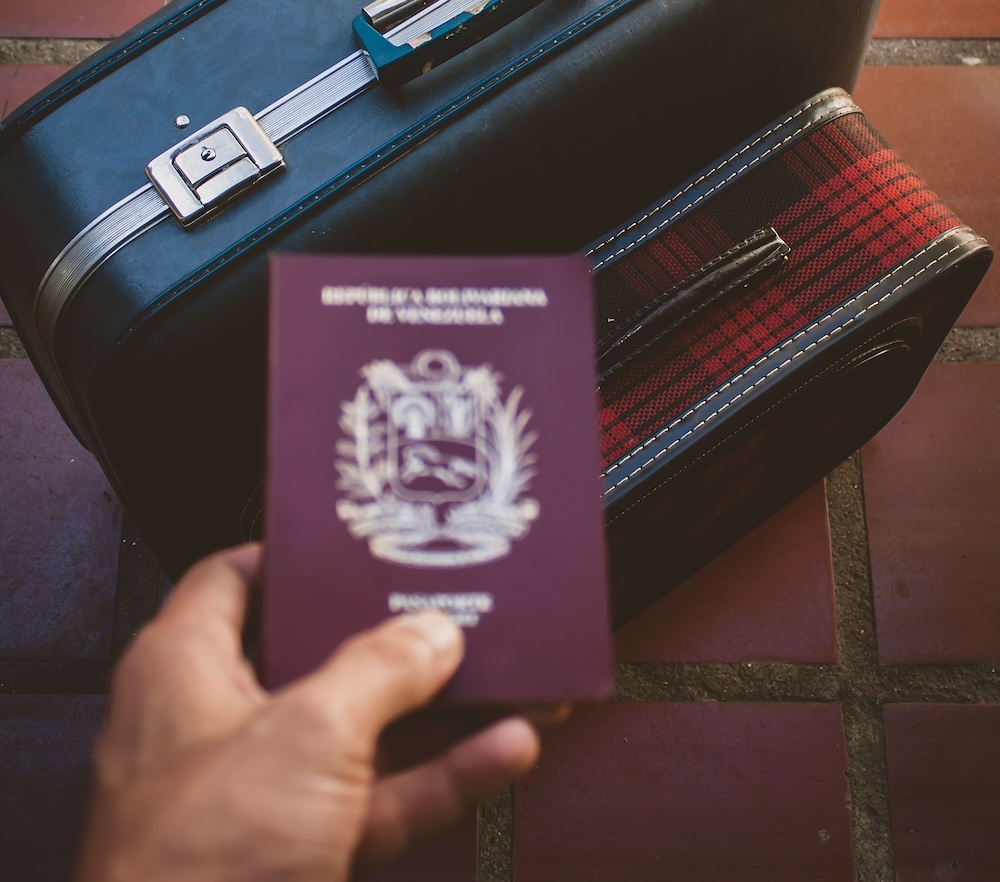
To apply for a residence permit based on social ties in 2026, you must prove that you have resided continuously in Spain for at least two years immediately prior to the date of your application.
The documentation proving your continued residency It must contain your identification information and, preferably, have been issued or registered by a Spanish public administration. For example, documents related to municipal registration, hospitalization, or a medical appointment in the public health system will be considered, as well as any municipal, regional, or national documentation that substantiates your presence in Spain.
Absences from Spain during this period may not exceed 90 days in total. It is crucial that every entry into and exit from the country be documented and that the number of days of absence be accurately calculated.
Carefully review all your documents. Any discrepancies in the dates of entry and exit, or an excessive number of days of absence, may be grounds for denial. Also keep in mind that if you applied for international protection, the processing time for that application does not count toward this calculation.
No criminal record: an essential requirement
It is essential to have no criminal record in Spain and in the countries where you have resided during the previous five years, for crimes defined under Spanish law. To prove this, you must submit a criminal record certificate issued by the authorities in each country where you have resided during those five years.
Processing certificates abroad can take some time. We recommend that you start the process early to avoid delays.
Family Ties or Social Integration Report

This brings us to the key requirement: when applying for residency based on social ties, you must demonstrate your integration into Spanish society. You have Two main ways to prove it:
- Proof of family relationships.
- Social Inclusion Report.
Proof of Family Ties
You can prove your ties to the community if you have family ties with other foreign nationals who hold a residence permit. The following are considered valid links:
- Spouse or registered domestic partner (up-to-date marriage certificate or domestic partnership registration).
- First-degree relatives in the direct line (parents or children), who can prove their relationship with a birth certificate.
Social Integration Report
If you don't have those family ties, the alternative is the social integration report, issued by the Autonomous Community or the City Council where you have your primary residence, if the autonomous community has delegated that authority. This is not the case in the two autonomous communities that host the most migrants: the Community of Madrid retains that authority, and in Catalonia there is a hybrid model, since the certificate is issued by the Generalitat but the application is filed with the city council.
The amendment to the Immigration Regulations by Royal Decree 316/2026 provided further details regarding the content of the report, specifying that the following factors, among others, will be evaluated: the length of time you have resided at your primary residence, your financial resources, and your efforts toward integration, as evidenced by your participation in social, labor, and cultural integration programs.
Here's a key tip: Get actively involved in your community. Participating in local activities is essential, not just for the report, but for true integration. Demonstrating that you have a wide family network is important, but don’t just seek support from your loved ones or from social services—which are overwhelmed—you can also turn to associations and organizations that specialize in immigration for advice. They’re sure to give you tips on the many ways to demonstrate integration and help you access those opportunities. Join cultural, sports, or neighborhood associations; do volunteer work… It all counts!
An important note regarding deadlines. Royal Decree 316/2026 itself established the possibility that, If the report is not issued on time, the inclusion may be justified by other forms of evidence. We advise you to stay alert: if a month passes without the report being issued after you’ve requested it, you can submit the documentation proving your social integration directly to the Immigration Office. The SEM Instruction on the Ministry’s social integration report provides examples of documents you can use to prove your integration and continued residence in Spain, including proof of remittances.
Sufficient financial resources: your means of support in Spain
"Sufficient financial means" refers to the Public Multiple-Effect Income Indicator (IPREM), which is established by the General State Budget Act; therefore, it is advisable to review any changes that may occur annually.
Proof of the IPREM's 100% must be provided to cover the living expenses of the person who will be applying for authorization based on ties to the community. The financial resources must be available in Spain.
For the family ties category, you must demonstrate financial resources totaling 200% of the IPREM: 100% of the IPREM for the family member with legal residence (for whom you are proving the relationship) plus 100% of the IPREM for you, as the applicant for residency based on family ties. This percentage applies regardless of the number of members in the household.
Final Checklist

In short, to apply for social integration, Along with the application form (Form EX-10) and proof of payment of the fee (Form 790, code 052, section 2.3.1), you must submit the documentation supporting the points explained:
- Continuous enrollment (2 years).
- No criminal record.
- Social integration, based on family ties or a social integration report (if you do not receive a response within one month, you may submit alternative documentation in lieu of the report).
- Financial resources available in Spain.
In addition, the Regulation requires that you comply with other general requirements:
- You must be in Spain at the time of application and not have the status of an applicant for international protection while your application is being processed.
- Not pose a threat to public order, safety, or public health.
- Not be listed as inadmissible in countries that have an agreement with Spain, nor be subject to a non-return commitment period.
Royal Decree 316/2026 introduced a new condition stipulating that an individual may not apply for this type of authorization based on ties to the country if they already hold another stay or residence authorization, or if they have pending proceedings for the granting, extension, renewal, or modification of such authorizations.
The Value of Your Effort: Beyond the Formalities
At Curiara, we celebrate every story of progress. We know that your hard work not only benefits you, but also enriches society as a whole. With regulations that shorten processing times and make it easier to find work, if you meet the requirements for social integration, we encourage you to take this step.
Before proceeding, please keep in mind that immigration regulations in Spain are constantly changing. We recommend that you confirm the requirements in effect at the time of your application by consulting the Immigration Portal of the Ministry of Inclusion, Social Security, and Migration or by consulting a specialized professional, as both the IPREM amount and the administrative interpretation of certain requirements may vary.
Sources consulted
- Royal Decree 1155/2024, dated November 19, New Immigration Regulations (Articles 124 through 127 and 130 through 132)
- SEM Instruction 1/2025 on Residence Permits Based on Roots in the Community.
- Form 28 – Authorization for Temporary Residence Due to Exceptional Circumstances. Social Ties. Ministry of Inclusion, Social Security, and Migration
- Frequently Asked Questions (FAQs) on Authorization Due to Exceptional Circumstances Based on Deep-Rooted Ties, Following the Adoption of Royal Decree 1155/2024, dated November 19. Ministry of Inclusion, Social Security, and Migration
- “Social Ties: You No Longer Need Three Years to Apply,” Immigration Attorney Pereira
- “Immigrants by Autonomous Community, by Continent of Origin of Migration to Spain,” INEBase
- Integration Reports, Community of Madrid
- Integration Effort Report, Gencat