
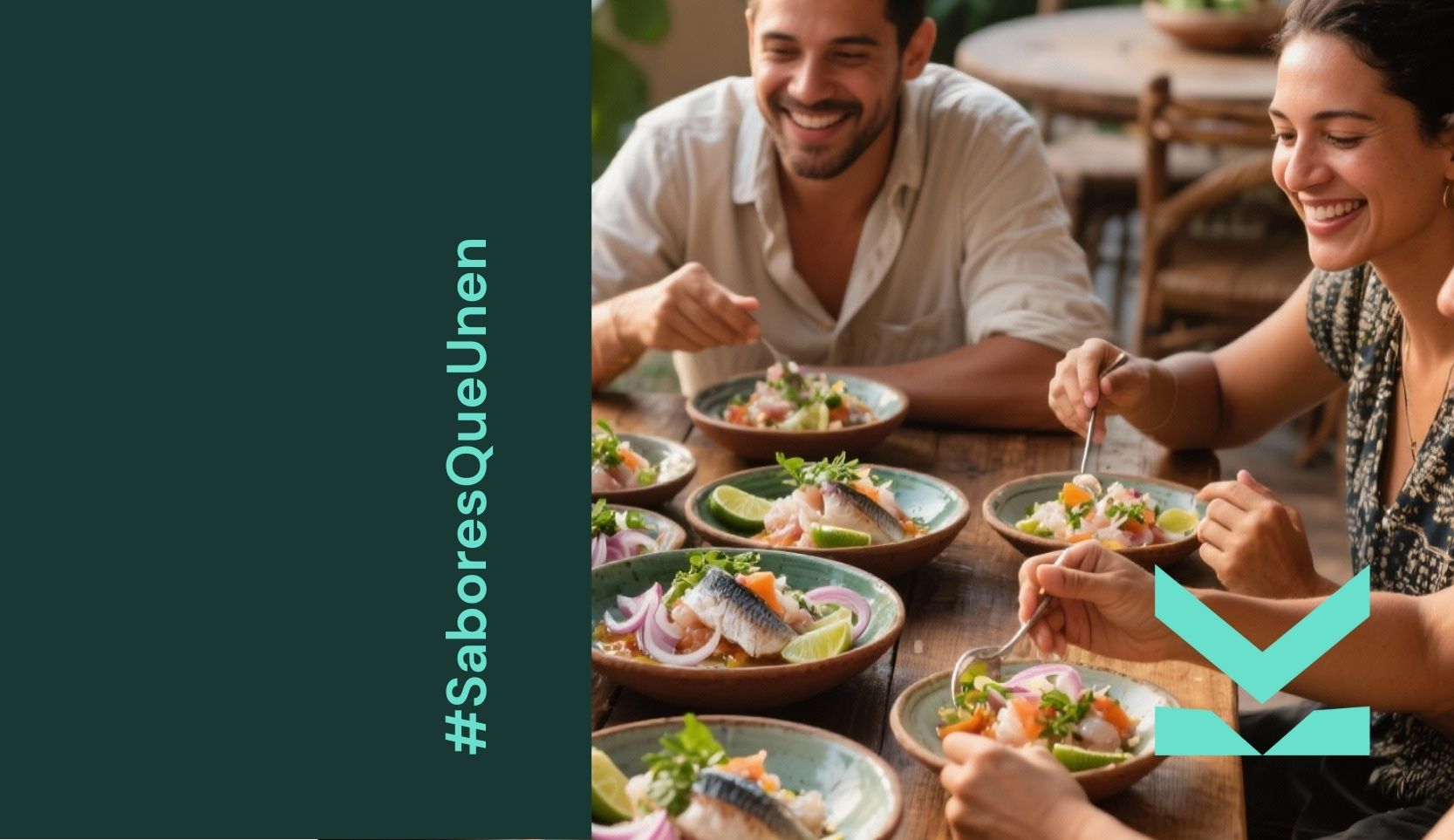
The ceviche It's one of those dishes that never stays still. Born on the coast, but travels. It changes ingredients, accent, and serving style, but retains something essential: its ability to connect us with the source. For many people in the Americas, and especially for those who have migrated within the continent or to the United States, ceviche is not just food: It is memory, identity, and a simple way to feel close to home..
When we are far away, some flavors weigh more heavily than others. Ceviche appears in key moments: an unexpected visit, an impromptu celebration, a day when we need to reconnect with our loved ones. It doesn't require an oven or long hours, but it does require attention, freshness, and respect. There is something deeply comforting in that simple gesture.
This overview of the different types of ceviche does not seek to establish hierarchies or versions.“correct".
Seeks to show how the same dish can be adapted to different territories, climates, and lives, and yet still fulfill the same function: join us.
What defines ceviche beyond the recipe: a technique born from the land
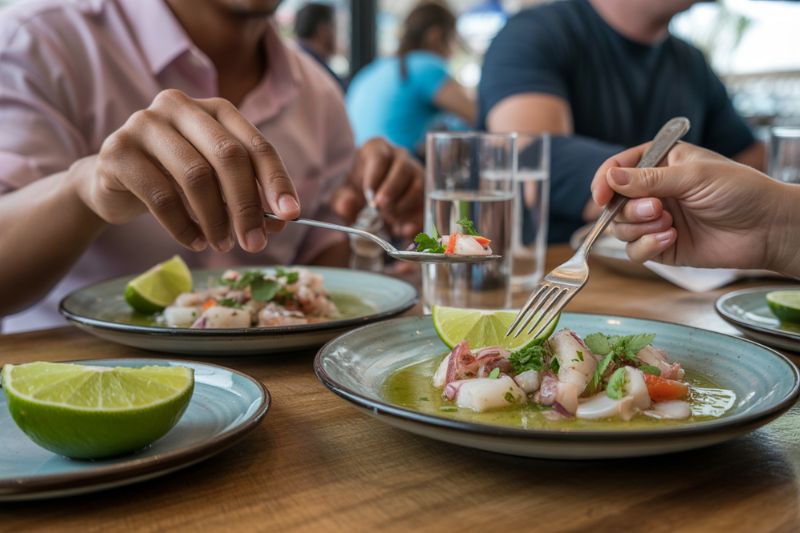
The ceviche is defined by a ancient technique based on acidity. Fish or seafood are marinated in citrus fruits, which transform their texture and flavor without the need for heat. But this technique did not arise by chance, but rather from the environment.
At coastal regions of America, where fish arrives fresh and the climate calls for light dishes, ceviche appears as a natural solution.
Beyond specific ingredients, ceviche shares a common logic: immediacy, freshness, and balance.
It is not a dish meant to be stored away, but rather to be enjoyed in the moment. That condition makes it special and, at the same time, deeply connected to shared experience.
Peruvian ceviche as a starting point: precision, respect, and character
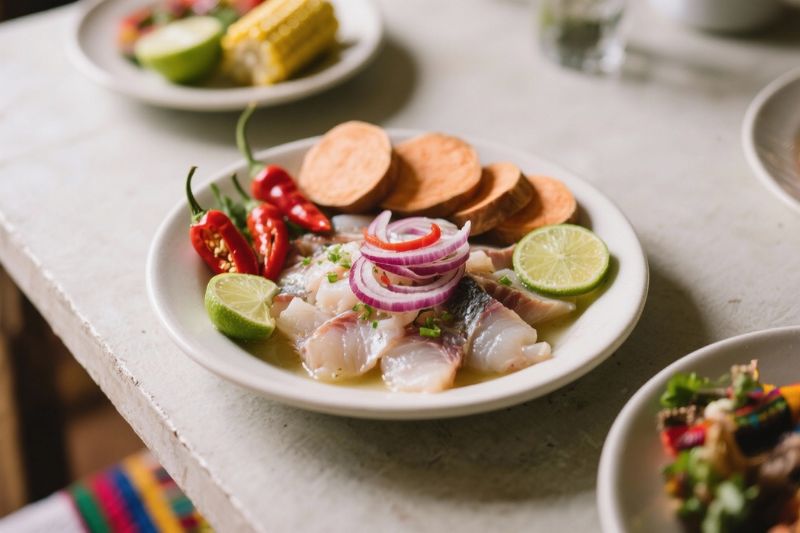
Talking about ceviche inevitably means talking about Peru. Peruvian ceviche is characterized by its accuracy and because fish plays such a prominent role. Few ingredients, controlled times, and precise balance between sour, salty, and spicy.
The use of chili pepper, red onion, and lemon creates an intense profile that does not seek to soften, but rather to assert itself. The accompaniments —sweet potato and corn— They add contrast without stealing the spotlight.
For those who migrated from Peru, this ceviche often becomes an affirmation of identity. Preparing it or finding it is a way of saying: this is also who I am, even far from the sea that saw him born.
Ecuadorian ceviche: a dish to be shared without haste
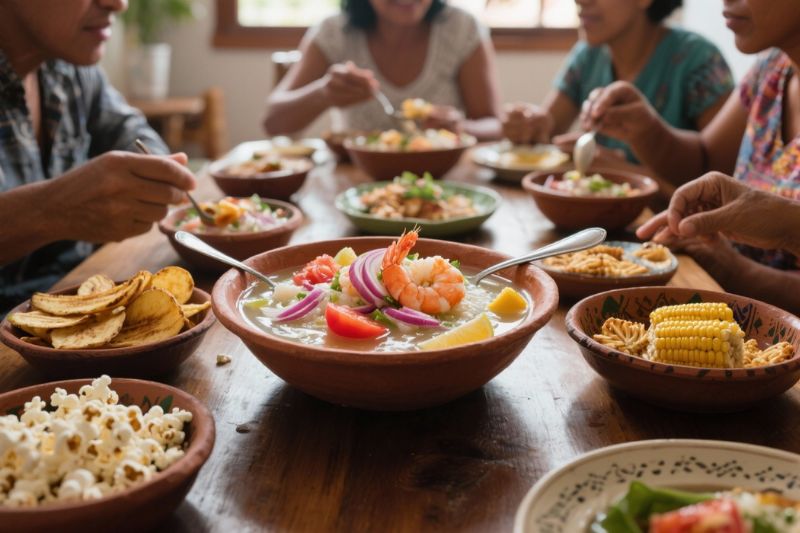
The Ecuadorian ceviche is recognized for its generous nature and by a way of understanding food that is deeply linked to time share.
Unlike other more concentrated versions, here the ceviche is served with greater amount of liquid, which makes it almost like a preparation for eating with a spoon, without rushing and without rigidity.
The shrimp is usually the protagonist, accompanied by a mixture of tomato, onion, and citrus fruits that soothes acidity and provides a more rounded and accessible flavor. It does not seek immediate impact, but rather continuity.
It is a ceviche that is enjoyed little by little, while the conversation progresses and the table gets longer.
The accompaniments, chifles, canguil, or tostado, they are not accessories, but essential part of the ritual. They combine, alternate, and share. Eating Ecuadorian ceviche is an experience that invites you to sit down, stay, and chat, rather than eating quickly.
In migratory contexts, this ceviche often occupies a special place. It appears at gatherings where the table becomes a gathering place, where everyone helps themselves and goes back for seconds.
It is a dish that recreates the feeling of home, even when the environment is different, reinforcing the idea that food can also sustain bonds.
Mexican ceviche: freshness, spice, and constant creativity
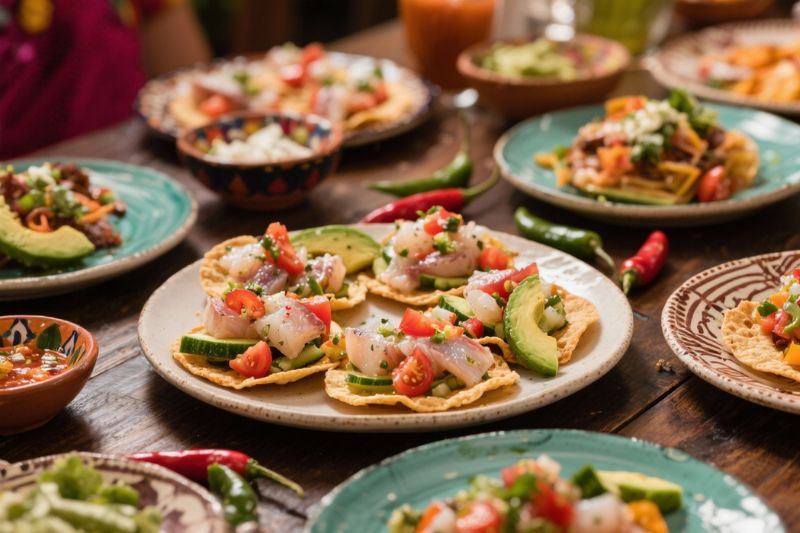
In Mexico, the ceviche naturally adapts to a latin cuisine marked by the diversitythe creativity and constant reinterpretation. There is no single correct way to make it: the dish is transformed according to the region, the ingredients available, and personal taste, while always maintaining a basic fresh and vibrant.
They appear tomato, cucumber, avocado, and different types of chili peppers, creating layers of flavor that balance acidity, spiciness, and freshness.
The Mexican ceviche does not seek uniformity; celebrates the mix and the possibility of adjusting each preparation on the spot.
Served on toast, ceviche becomes practical, social, and shareable. It is eaten with the hands and is suitable for informal gatherings and spontaneous celebrations. It is a dish that invites you to move, converse, and share, rather than sitting in silence.
For those who migrate from Mexico to other countries America or to United States, This ceviche is particularly adaptable.
Allow replace ingredients without losing character and maintains its festive spirit, even far from the original context. It is a way of carrying with you a live kitchen, capable of transforming itself while remaining recognizable.
Ceviches from Central America and the Caribbean: sea, climate, and collective memory
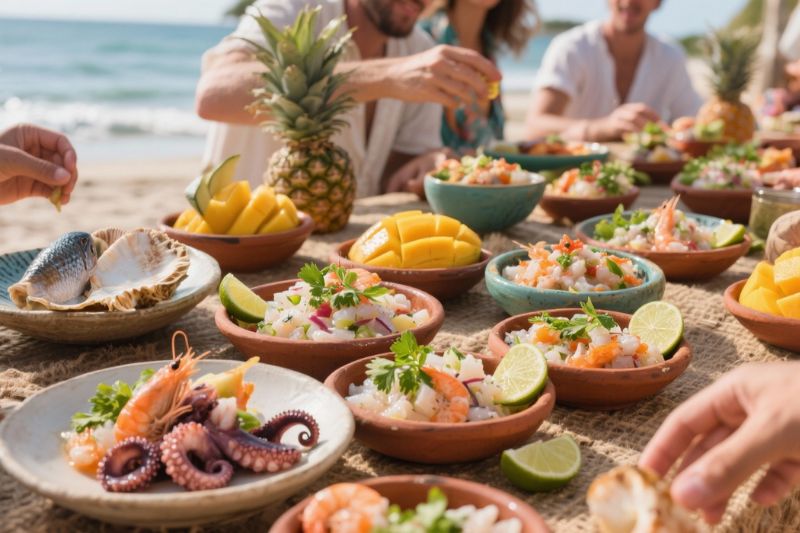
At Central America and the Caribbeanthe ceviche takes many forms. It can contain fish, shrimp, octopus, or snails, and in some regions it is combined with tropical fruits, coconut milk, or local spices.
These versions are deeply marked by the climate and daily relationship with the sea. These ceviches are designed for hot weather, for group enjoyment, and for outdoor celebrations.
For those who migrate from these regions, preparing ceviche is bring with you the landscape and rhythm of your place of origin.
Ceviche when we migrate: adaptation, intention, and continuity
When we migratethe ceviche change. We don't always find the same ingredients., so we adjust, replace, and test. Something important happens in that process: the dish ceases to be a copy and becomes conscious adaptation.
Preparing ceviche away from home is an act of care. It is recreating a flavor that accompanies us, sharing it with others, and keeping a memory alive. It doesn't matter if it's not identical to the original.; what it represents matters.
In many migrant households, the ceviche appears in moments of connection: visits, small celebrations, days when we need to feel at home again. It's a recipe that doesn't demand perfection, but rather presence.
A dish that accompanies celebrations and ordinary days
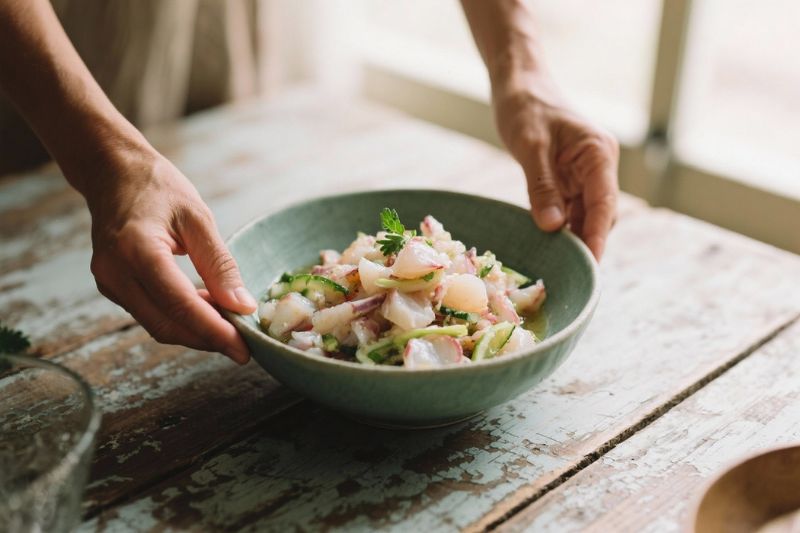
The ceviche doesn't need a date marked on the calendar to make sense. It appears in impromptu lunchesin traditional dishes, in last-minute meetings, in Sundays with no plans or on hot days when you want something cool.
It does not require ceremony or extensive preparation, and that is precisely why easily integrates into everyday life.
It is a dish that adapts to the rhythm of each day. It can be the centerpiece of a small celebration or a simple meal that is shared without high expectations. Its lightness allows it to be present both in lively gatherings and in quiet moments, when what we are looking for is something that comforts without imposing itself.
That versatility gives it special value. The ceviche does not overwhelm or take up all the space; accompany. It's there to add something, to make the moment more pleasant, to create a pause.
In migration contexts, where time is often divided between work, paperwork, and adaptation, having a dish that integrates seamlessly has a profound meaning.
Preparing ceviche on an ordinary day can become a silent gesture of care. It's a way of treating ourselves to something familiar, of taking a little break from our routine and reminding ourselves that we also deserve to enjoy, even without any apparent reason.
Ceviche as a journey that never ends
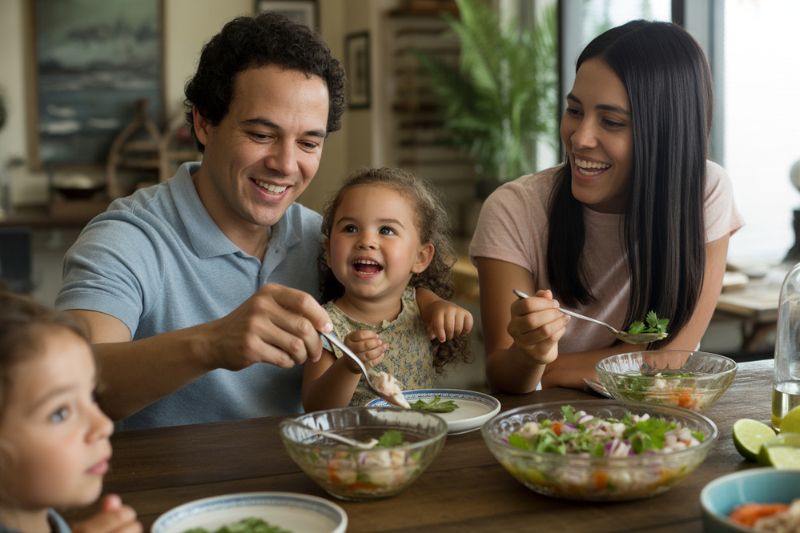
Talking about ceviche is to talk about movement. Of coasts, routes, and people who travel carrying with them flavors that are transformed without disappearing. Each version of ceviche reflects a different place, a particular history, and a specific adaptation to the environment.
But beyond their differences, they all share the same function: support. Preserving memories, connections, and identity. Ceviche is not tied to a specific territory; recreates wherever there is a desire to prepare and share it.
As long as we can cut fish, squeeze citrus fruit, and adjust the flavor With what we have at hand, we remain connected to something greater than a recipe. We continue to affirm that The origin is not lost, it is only transformed..
That's why, even far away, ceviche continues its journey. It accompanies new stages, new tables, and new stories.
And in that constant movement, it reminds us that We, too, continue to move forward., taking with us what sustains us.
Flavors also nurture and connect
At Curiara, we believe that care is expressed in everyday gestures. Sometimes in a shipment, sometimes in a call, and many times in a dish that brings back something familiar. Ceviche reminds us that food is also accompany, connect, and support.
Because being far away doesn't mean forgetting.
And because Caring can also start in the kitchen..