
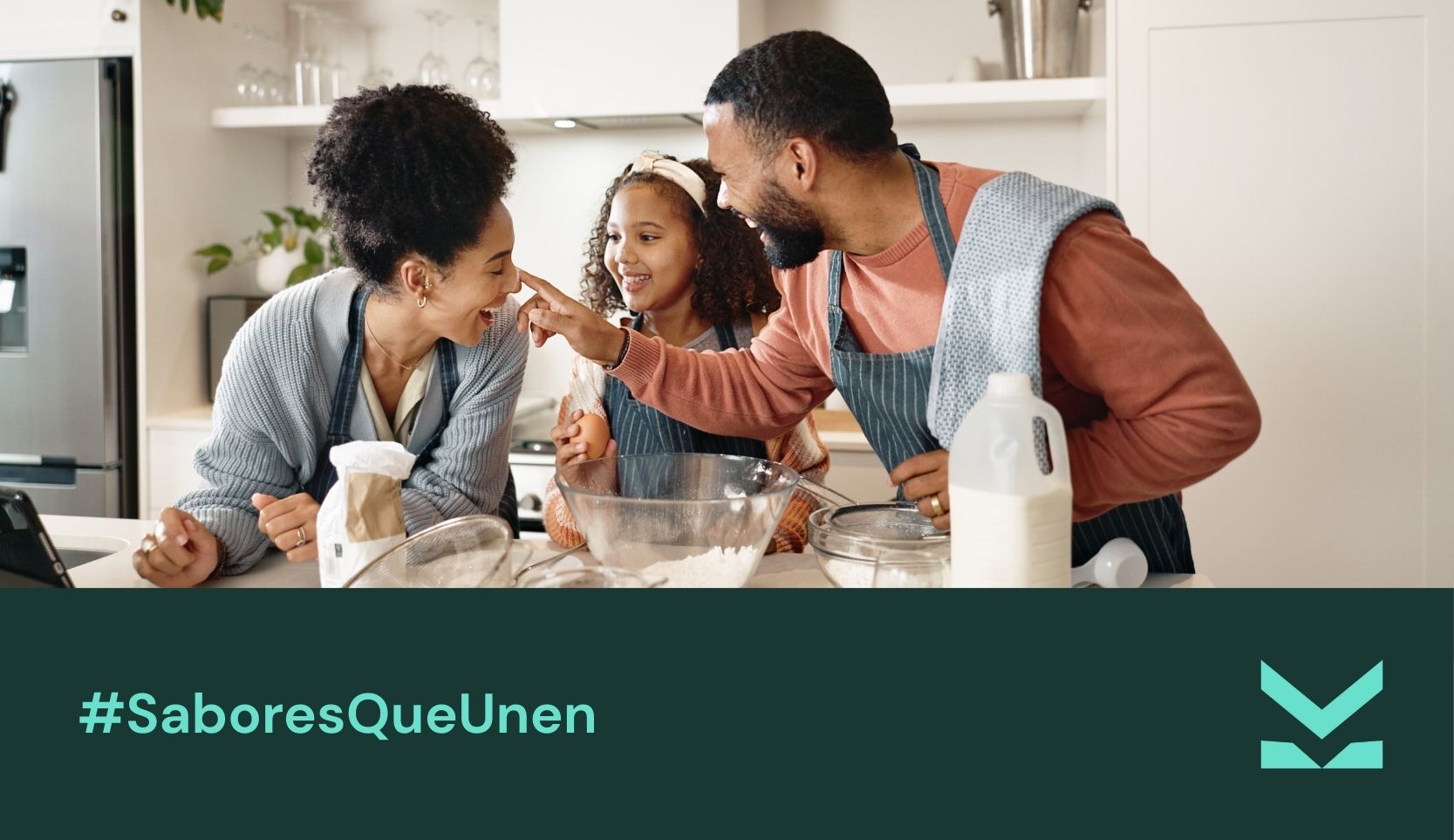
The pupusas are much more than a typical dish of the latin cuisine; for thousands of migrant families, they are that flavor that sustains our roots even when life takes us away, for whatever reason.
From a Latin American kitchen to a shared table in Houston or New York City, every pupusa we eat reminds us of who we are, where we come from and, of course, who we continue to care for from afar with every shipment we send.
At Curiara, we are talking about pupusas to also talk about community, love for our land and everything else what we miss when someone migrates to another country.
What are pupusas?
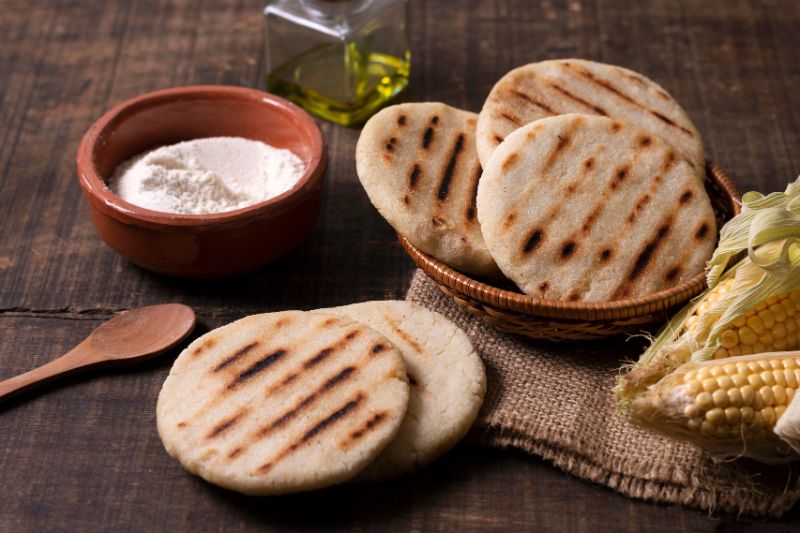
The pupusas are thick corn or rice tortillas, stuffed of ingredients such as cheese, refried beans, chicharrón, ayote or loroco flower, They are cooked on a hot griddle until golden brown on the outside and soft on the inside.
They are almost always accompanied with sauce tomato and pickles, a kind of salad of cabbage, carrots and other vegetables that are marinated in vinegar and spices.
Although today they are found in many parts of the world, the pupusas are a dish that comes from of El Salvador, It is a symbol of identity there and in other Latin American countries.
In 2005 were officially declared as cultural heritage of that country, and every second Sunday of November is celebrated the National Pupusa Day, This is a date that many migrant communities also commemorate in their neighborhoods and host cities.
The difference with arepas
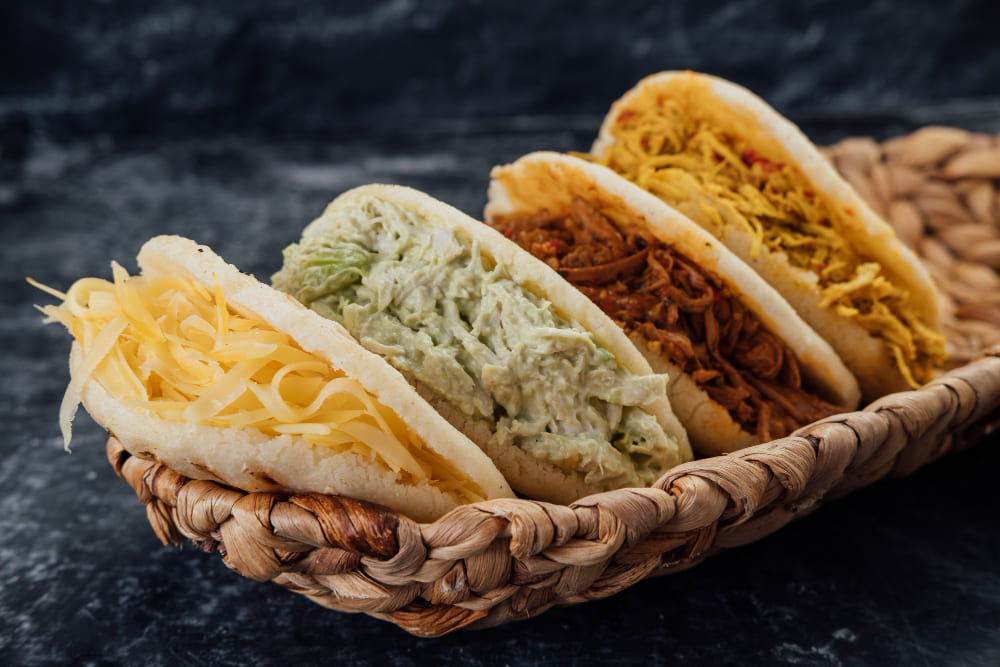
The main difference is that the arepas are corn dough discs that are opened to be filled later, while the pupusas are discs that are already prepared with the filling sealed inside, so they have a softer texture and are served with curtido and red sauce.
The mass of the arepa is usually made of pre-cooked flour, better known as maseca, while pupusa can use corn or rice flour, although the main difference is that the filling and cooking process is different, since the flavor is sealed from the beginning.
A bite with history and deep roots
The origin of the pupusas dates back to pre-Columbian times, where archaeological investigations and some historical sources indicate that they were already elaborated by indigenous peoples in the region that is now El Salvador, long before Spanish colonization.
This is because the ingredients are quite basics, The local corn or herbs such as loroco and beans are fairly easy to find and something that speaks of a cuisine that was born from the land and the creativity to take advantage of what was available at the time.
Over the centuries, the pupusa left transforming; New fillings such as chicharrón and cheeses have been added, but it continues to maintain its communal essence.
It is a food that is shared, It is usually eaten at celebrations, family gatherings or as a reward after a long day's work.
A taste of home in other countries
When a person migrates, he or she not only travels with the letter of residence, He also takes with him his memories, recipes and flavors of his country.
In the case of pupusas, they have traveled with their people and today they can be found in cities such as Los Angeles, New York, Washington D.C., Toronto, Madrid or Milan, where there are Latino communities that maintain the legacy and prepare them for the whole world.
It is common that, in many neighborhoods, the first clue that Latin Americans are nearby is the pupusería“ signs” in the premises, shared with other Latino businesses nearby.
These spaces not only sell food, but also function as meeting points, become small shelters for migrants where people talk in confidence with other compatriots, exchange news about the country and tell stories about the families still on the other side.
How are they prepared: a recipe that travels?
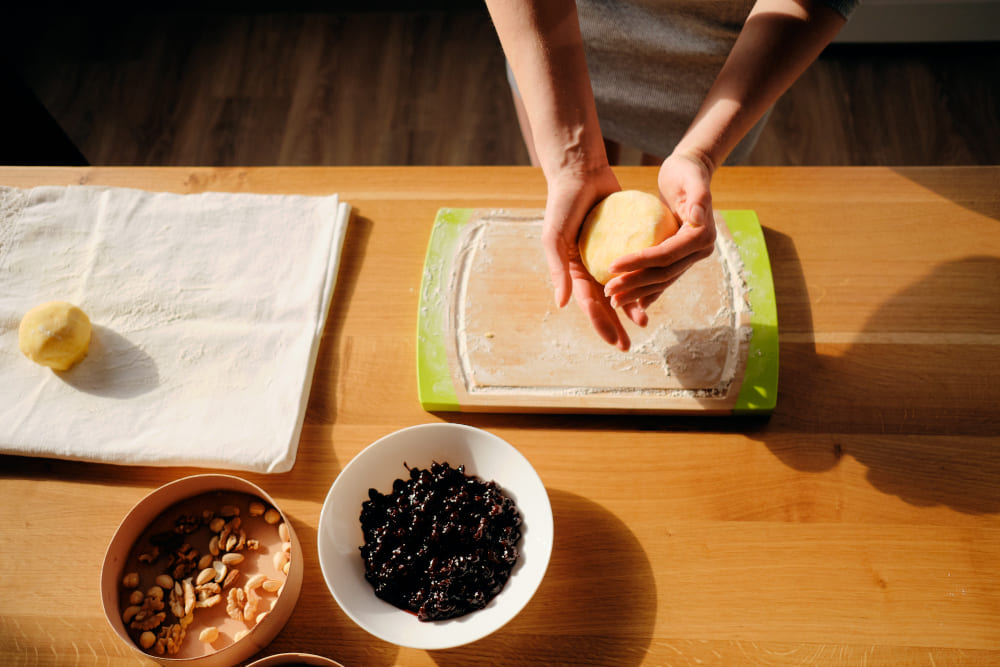
- The pupusa base is a soft dough of corn or rice flour, mixed with warm water and salt until it becomes manageable and elastic. From this dough, small balls the size of a small ball are formed, which are then flattened slightly to be filled with cheese, refried beans, ground chicharrón or other combinations.
- Once the dough has completely embraced the filling, it is returned to flatten carefully, until a thick disk is formed, and it is placed on a hot griddle or griddle.
- Pupusas are cooked on both sides, turning them several times so that they brown evenly and the inside is melted.
- They are served hot, accompanied by tomato sauce and curtido, which is prepared with cabbage, carrot, onion, vinegar, water and spices such as oregano and cumin, letting it rest to take flavor.
Basic recipe
If you are out of your country and want to feel the taste of home, prepare pupusas can be a good starting point. We tell you step by step how you can replicate this exquisite recipe at home:
- You will need corn flour or rice flour, warm water and salt.
- Mix until you obtain a smooth dough that does not stick to your hands.
- Let it rest for a few minutes, form small balls, open them carefully in the center, fill them with cheese, refried beans or chicharrón, and close them again, giving them a disk shape.
- Heat a griddle or frying pan without oil over medium heat and cook each pupusa for several minutes per side, until golden brown and you feel the filling is hot inside.
- Serve with pickles (cabbage, carrots and onion marinated in vinegar and spices) and a simple tomato sauce.
- They don't have to be perfect the first time: the important thing is the gesture, the time shared and the nostalgia that reappears with each bite.
Typical fillings and modern variations
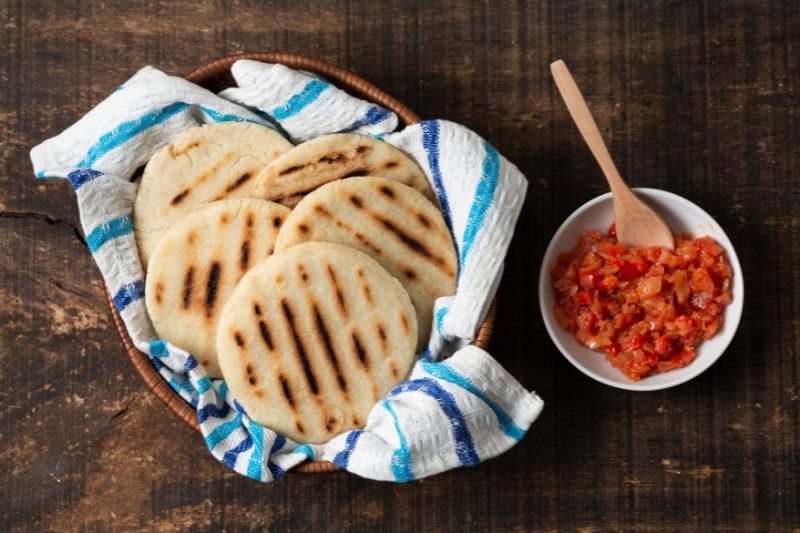
Among the most traditional pupusas are those of cheese, beans with cheese, crackling and the famous “revolts”which combine several ingredients in the same bite.
Also highly appreciated are those of ayote (pumpkin), jalapeño with cheese and those of loroco flower, an aromatic plant very present in Central American cuisine.
Over time, modern variations have emerged, ranging from vegetarian options and vegan pupusas to pupusas stuffed with less traditional ingredients, such as spinach, mushrooms or even dairy-free cheese versions.
This evolution shows how the pupusa adapts to the new realities without losing its sense of belonging, as it continues to be a dish that tastes like home, even if the ingredients or the place where it is prepared change.
Remittances and pupusas, the act of supporting from afar
For many families, income coming from abroad by a family member who has migrated is what keeps the table full of pupusas on Sundays.
In this context, we can say that the transfers you do with Curiara are not just a mere banking movement: is a way of saying “I'm still here”, even if you can no longer physically share the table.
Curiara was born precisely at this meeting point, making it easier for migrants to send money securely, quickly and clearly, The other side of the coin, so that there are still simple moments that mean everything, such as gathering around some freshly made pupusas.
Today, many of a migrant family's important decisions are made by looking at the mobile screen: when to send money, how much, to whom, what expenses to prioritize.
That's why, at Curiara we take care that every detail of the digital experience is also human, because our goal is to make the path between the sender and the receiver as safe and short as possible, to make the distance feel a little smaller when sharing food, news and plans for the future.