
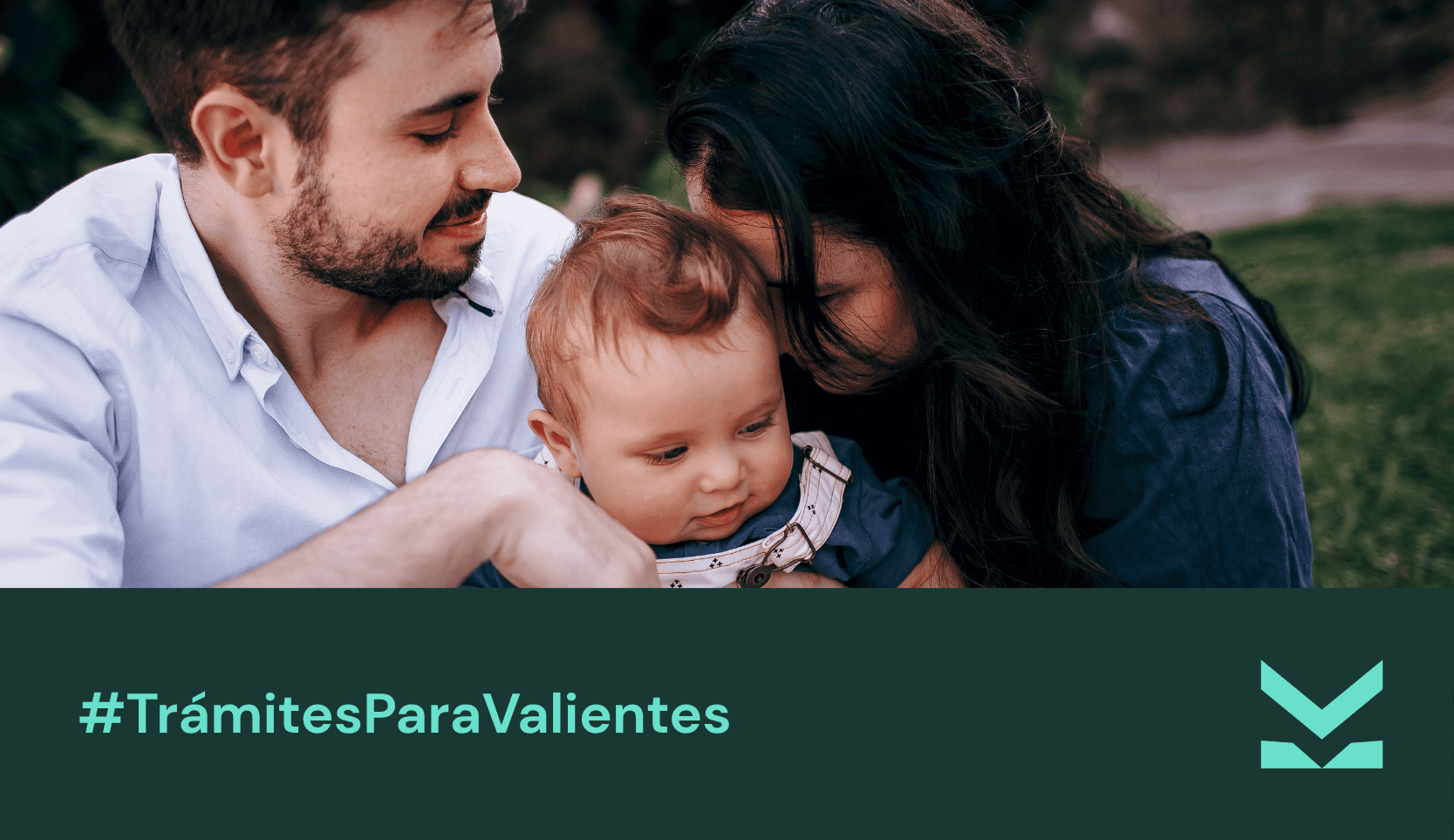
Few things weigh as heavily on those who emigrate as the distance from their loved ones. But that sacrifice may have a reward: Family reunification in Spain is the legal route that allows you to be reunited with your family and build, together under one roof, the prosperous life you’ve dreamed of.
At Curiara, we've put together this clear and up-to-date guide, based on official sources, to help you understand what family reunification is and what the requirements are.
What is family reunification?

Family reunification is a temporary residence permit granted to family members of a foreign national who is already legally residing in Spain. In other words, it is your right, as a legal resident, to have your closest family members come live with you.
It is common to confuse this route with the social roots, but they apply to different situations. Family reunification This applies to a person who is already legally residing in Spain (the sponsor) and wishes to bring over their family members, who are typically in their country of origin. Social integration, on the other hand, is intended for foreign nationals who are already in Spain—usually in an undocumented status—and who demonstrate their integration after a period of continuous residence; one way to do this is to prove family ties to individuals who already have residency status.
Family Reunification in Spain: New Regulations
Family reunification is provided for in both the regulations both European (Directive 2003/86/EC) and Spanish: Organic Law 4/2000 (Articles 16–19) and the new Immigration Regulation approved by Royal Decree 1155/2024, dated November 19 (Articles 65–68), which replaced the previous Regulation from 2011.
The new Regulation reorganizes the procedures while maintaining the spirit of promoting family unity. It is important to keep in mind the key points that will take effect upon its entry into force:
- The one-year legal residency requirement prior to the sponsor's arrival, with exceptions that we will discuss later.
- The financial resources They continue to be calculated based on the Public Multiple-Effect Income Indicator (IPREM), with specific rules and favorable reductions when minors are involved.
Our advice from Curiara: Always check the regulations in effect at the exact time you submit your application.
Family Reunification Requirements

These are the requirements that the sponsor (the person who already resides in Spain and is applying to bring their family) must meet:
1. Length of prior residence. You may submit the application once you have resided legally in Spain for at least one year and have applied for a residence permit valid for at least one additional year. This requirement does not apply when the sponsor:
- He or she holds a long-term residence permit or a long-term EU residence permit in Spain to bring his or her ascendants, or those of his or her spouse or partner, to Spain.
- He resides in Spain based on his previous status as an EU long-term resident in another Member State.
2. Sufficient financial resources. You must demonstrate that you have sufficient fixed and regular income to support yourself and your family. The minimum amounts, calculated based on the IPREM, are:
- Two-member household (sponsor + sponsored family member): A monthly amount equal to 150% of the IPREM is required.
- For each additional member: add 50% of the IPREM.
When minors or represented individuals are involved, the regulation allows for a reduction in this requirement. In such cases, it is considered sufficient to have a stable source of income equal to or greater than the Minimum Wage (SMI). More specifically, for a two-person household in which one member is a minor, the required amount will be 110% of the annual guaranteed amount of the Minimum Living Income (IMV), plus an additional 10% for each additional minor.
Curiara Tip: In administrative practice, the income of a spouse or partner who already resides and works in Spain is typically taken into account when demonstrating the financial stability of the household as a whole. We recommend that you confirm this with a specialist before submitting your application.
3. Adequate housing. You must prove that you have adequate housing to accommodate your family. This is demonstrated primarily by a report issued by the competent authority in your Autonomous Community (or city government). If the government does not issue it within one month, you may provide proof by other means (certificate of occupancy, number of rooms, use of each room, number of residents, and living conditions). The report is valid for a maximum of six months.
4. Health insurance. You must have health insurance that covers both you and your reunited family members.
5. Other requirements. The regulations also address other, more general factors:
- Not be a citizen of a member state of the European Union, the European Economic Area, or Switzerland, or a family member of citizens of these countries who are subject to the Union citizen regime.
- Not to be present in Spanish territory illegally, nor to be listed as inadmissible under international agreements that Spain has signed with other countries.
- Have no criminal record in Spain or in the countries of residence over the past five years.
- Not pose a threat to public order, public safety, or public health, nor suffer from any illness that could have serious public health implications.
- Not being within the period of the commitment not to return to Spain that was made upon voluntarily returning to the country of origin.
- If you already have other minor children in Spain who are of compulsory school age, they must be enrolled in school.
- Pay the applicable fee (Form 790, code 052).
Which family members can you sponsor?
A very common question about family reunification in Spain is exactly who you can bring with you. The new regulation allows you to reunite with:
- Spouse or partner (over 18 years of age) in a relationship similar to a marital one. The couple must be officially registered or provide proof of a stable cohabitation of at least 12 consecutive months (this period is not required if they have children together). No more than one spouse or partner may be granted family reunification.
- Children of the sponsor or their spouse/partner, people under 18, o older adults with disabilities who require support, or older adults who are unable to care for themselves due to their health condition.
- Legally Represented Individuals by the sponsor, under the same age and health requirements as for children.
- Ancestors First-degree relatives (parents or parents-in-law) over the age of 65, when they are the dependents of the sponsor and there are reasons justifying the need. In exceptional cases, ascendants under the age of 65 may be admitted on humanitarian grounds.
- An adult son or daughter who is going to serve as caregiver of the sponsor, when the sponsor has been determined to have a degree of dependency.
Step by Step: How to Apply for Family Reunification
The family reunification process consists of two phases: one in Spain (initiated by the sponsor) and another in the country of origin (the visa application filed by the family member). Here’s a summary:
- Submitting the Application (in Spain). The sponsor must submit the official EX-02 form, along with all documentation proving that the application requirements are met, to the Foreigners’ Office in their province or online through the electronic portal (Mercurio).
- Payment of the fee. Form 790, code 052, within ten business days.
- Resolution. The Administration has two months to issue a decision. If it does not respond, the request is deemed denied by administrative silence.
- Visa Application (in the country of origin). Once authorization is granted, the family member has two months to apply for the visa at the diplomatic mission or consular office in their place of residence, providing a passport, a criminal record certificate (for those of legal age), a medical certificate, and the original documentation proving family ties.
- Concession and travel. The Consulate processes the visa within one month at the latest. Once the visa is granted, the family member must pick it up in person within one month and enter Spain within one month at the latest.
- Foreign Resident ID Card (TIE). Once in Spain, the family member has one month from the date of entry to apply in person for the TIE at the appropriate police station.
Foreign Documents: Translation and Legalization
One detail that makes the difference between a successful application and a rejection: any document issued in another country must be translated into Spanish (or a co-official language) by a certified translator and, in addition, legalized with a Hague Apostille or through consular channels. Don’t overlook this step: start these procedures well in advance, as they tend to take time.
Curiara, by your side at every reunion
The process of family reunification in Spain may seem long and full of red tape, but it's not just paperwork: it's a necessary step toward long-awaited reunions.
At Curiara, we’re here to support you on this journey with this guide, but please keep in mind that it is intended solely as a general guide. We recommend that you consult the official information sheet from the Ministry of Inclusion, Social Security, and Migration for more details and, if you have any questions, seek specialized professional advice.
Sources consulted
- Ministry of Inclusion, Social Security, and Migration. Form 8 – Temporary Residence Permit for Family Reunification.
- Ministry of Inclusion, Social Security, and Migration. Form EX-02. Application for a Temporary Residence Permit for Family Reunification.