
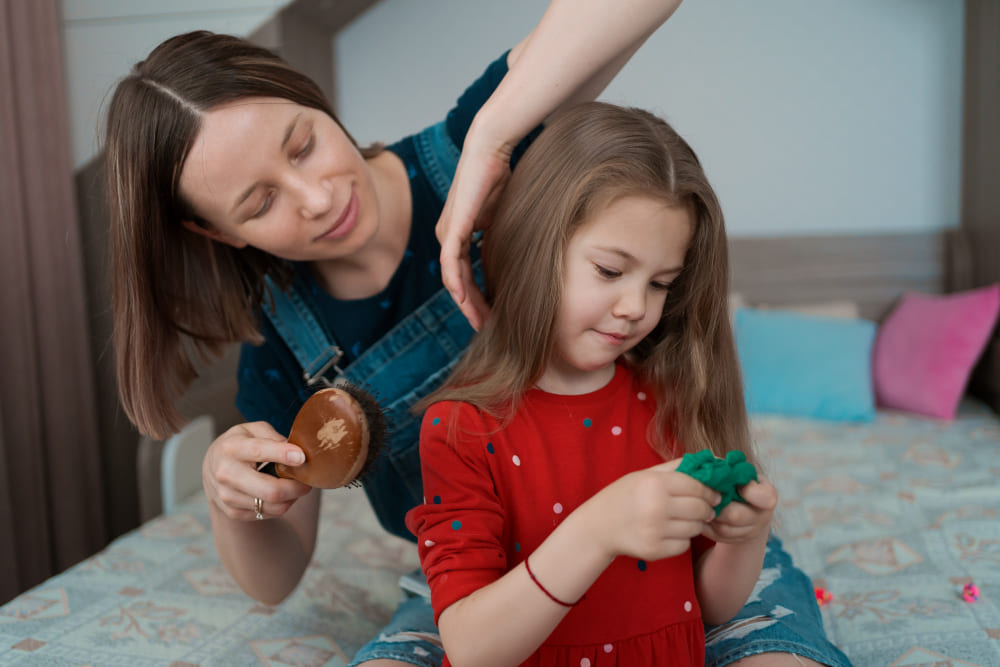
If you are looking for what is a au pair in Europe, think of an experience of cultural exchangeYou are placed with a host family on a temporary basis, live with them, help with childcare and some housework, and in return you receive accommodation, food and a small salary.
Moreover, it is understood as a stay to improve the language and culture with a deeper knowledge of the host country, not as just any job, as this can provide you with benefits in more areas than just employment.
For many people migrants already living in Europe or who are preparing their arrival, be au pair can be a way to start taking your first steps and adapting.
This is especially interesting because you get to have a place to live, practice the language and build your autonomy with a close support network; but always without losing sight of the fact that there must be a clear agreement with fair conditions.
What does it mean to be an au pair in Europe?

The European Union describes the placement au pair as the temporary reception of young foreigners by families, with the aim of improving their linguistic (and possibly professional) knowledge and broadening their general culture through a better knowledge of the country where they live.
The same agreement makes it clear that the au pair does not exactly fit into the category of a student or a worker, but rather into a category of an au pair. special category with features of both.
This nuance is important for your personal growth, because if au pairing becomes an endless working day with no real time to study or rest, it ceases to be an exchange and becomes too much like a disguised domestic job, something that the European framework itself tries to avoid by setting very strict limits and giving you breaks that you have to enjoy.
The minimum conditions to become an au pair

There is no single rule that is valid in all European countries, but there are principles and references that help you identify whether the experience is well thought out. Once this is clear, you should always check what applies in your particular country. (Spain, France, Germany, etc.) and how this affects your nationality.
Duration
According to the European Agreement on au pair placement, the stay must be temporary and, in principle, should not exceed one year, although it may be extended up to one year. maximum of two years. This fits in with the idea of a stage to learn, adapt and make a subsequent leap (studies, employment, another country, etc.).
Age
The agreement sets a benchmark age of 18 to 30 years old (and provides for exceptions to the maximum age according to the competent authority). In the practice described by the European Youth Portal, lost au pairs have between 18 and 24 years old, although some agencies accept up to 30.
What you get: accommodation, board and money
The Europe Agreement indicates that the host family must provide the board and lodging and, “where possible”, a separate room where you have your privacy.
It also provides for you to receive a amount of money, fixed and paid under conditions to be determined in writing.
The European Youth Portal summarises this activity clearly: childcare (and sometimes housework) in exchange for accommodation with board and some pocket money.
Timetables, rest and time to study language
In order to make the exchange real, the European framework includes three very specific points:
- Time spent on these services, as a general rule, should not exceed five hours a day.
- You must have the adequate time to attend language courses and for your cultural development. The family should help to organise all this.
- You have the right to at least one full day off per week, and at least one free Sunday per month.
If you are in Europe as a migrant, this point is especially important because fatigue and uncertainty are direct enemies of your growth; without rest, language courses and personal time, there will be no learning that is sustainable.
Au pair in Spain: what you need to know if your focus is on living here

Spain is often an attractive destination for many people, but especially for people from Latin America, because it We share a similar language and culture, But precisely because of this, there is one point you need to bear in mind, and that is that you will lose the language learning component.
There is no au pair visa in Spain
This is the case in Spain, as a general rule, there is no official au pair programme or a specific visa for au pairs, although, in practice, these stays are covered by the student visa. It is therefore often stressed that you should check with the consulate or the competent authority in this particular case. It is best to have everything tied up so that there are no surprises later on.
Something you should also bear in mind is that if you come from a Latin American country with Spanish as its official language, it may not be allowed to “working as an au pair in Spain because you could not justify a stay of Spanish studies as the basis for the visa.
This is not to say that there are no ways to live a experience of living or caring in Spain, However, it does mean that au pairing linked to language studies can clash with the administrative logic of some countries. procedures, and should be confirmed before committing to a family.
The key: always check official channels
The exact requirements depend on your nationality, length of stay and city where you are going to live, These should be confirmed with official sources (consulates/authorities) before travelling.
The European Youth Portal recommends precisely to check all your doubts before coming and to plan everything in advance.
How can it sustain your personal growth?

To migrate is not to disappear: is to be in a different way, to sustain bonds and build your future step by step. On this path, a well-defined au pair stage can help you grow without feeling like you are doing it blindly, because it combines having a home, a routine and responsibilities with learning a new language, understanding the culture and gradually achieving your independence.
1) Autonomy with a sustaining network
Living with a family forces you to organise yourself: schedules, communication, habits, budget and responsibilities. That structure is useful when you migrate, because it gives you a The next step can then be planned more calmly.
2) Living together skills
The Europe Agreement provides for a written agreement reflecting rights and obligations, preferably before travelling or, at the latest, within the first week.
Learning to negotiate conditions, to ask for changes with respect and to set limits without guilt is also applied personal growth, so you can acquire a new migrant skill.
3) “Real” language and culture”
The European framework insists on the linguistic and cultural objective: you will improve your language skills and acquire the culture by getting to know the host country. Even if you already speak Spanish, if you you move within Europe You may be interested in becoming an au pair in a country with a different language (France, Germany, the Netherlands, Ireland, etc.) to add a second language that will open doors for you in the future.
4) Trust: the everyday also builds the future
Everyday gestures should be valued: to care for, to support, to be there even if you can't be there. This is what an au pair experience is all about: constancy, small decisions, routine and responsibility which, when accumulated, strengthen your self-esteem and your ability to move forward in Europe with dignity.
Practical steps to get off to a good start
The difference between a good experience and a bad one often lies in what you define before you arrive and what you write down.
1) Demand a written agreement (and do it in time).
The Europe Agreement provides that the terms and conditions should be set out in a written agreement, preferably before leaving your country and, at the latest, during the first week with the family. It also provides for a copy to be deposited with the competent authority or organisation chosen by the host country authority.
In practice, such an agreement should include: timetable, chores, pocket money, days off, room, insurance, courses, house rules, etc.
2) Prioritise platforms/organisations with referrals
The European Youth Portal advises to use a agency or specialised organisation if you do not have personal contacts, Remember that they usually charge a fee. It is also advisable to ask former au pairs or industry associations about their experience, in order to check the reliability of the information before making any decisions.
3) Secure time to study
This refers to the adequate time you should have for language courses and all kinds of cultural development activities.
The family must facilitate and organise timetables accordingly. If a family does not accept this from the outset, it is a red flag because it clashes with the purpose of the programme.
4) Be clear about your priorities
If you already live in Europe and support your family from afar, your priority is not just to “live the experience”, but to follow a plan. It will probably be important for you to know how much you will save, what you will study, what papers you need and what step you will take next. Because growing up in Europe is also about building stability without getting lost along the way.