
Search for information on how to become self-employed in Spain usually comes at a key moment: when we want to become self-employed, regularise our activity or give legal form to something we have been doing. Becoming self-employed is not only a professional decision, it is a way to taking care of our stability, The aim is to bring order and to build one's own path with greater security.
For many people, becoming freelance means gaining real autonomy: being able to invoice, access rights, grow without depending on third parties and move forward with peace of mind. But it also implies responsibilities, formalities and conscious planning so that the project is sustainable over time.
In this article we will explain, step by step, how to become self-employed in Spain, What we need to keep in mind and how to take care of our professional stability while we build something of our own. Because entrepreneurship is not about jumping in without a net. create a structure that sustains us.
Checking whether we can register as self-employed: the starting point

Before entering into the formalities of how to become self-employed in Spain, We need to confirm something basic: if we comply with the requirements for self-employment. This step is key to avoid problems later on and to start safely.
In general, in order to register as self-employed we need:
- Have the legal right to work in Spain, whether by nationality, residence or specific authorisation.
- To have a NIE or DNI in force.
- Be clear about what activity you are going to develop, as this will influence the next steps.
For many migrants, this is a time to review their administrative situation calmly. Not all residence authorisations allow for self-employment, so it is important to check before starting the process or find out how to modify the permit if necessary.
This first check is not just another formality: it is a form of taking care of our stability from the outset. Starting out as self-employed without complying with the requirements may lead to sanctions or blockages affecting the project.
Once we confirm that we can do this legally, the path becomes clearer and we can move forward with greater peace of mind.
Registering with the tax authorities: defining our activity and starting in order

One of the central steps in how to become self-employed in Spain is the registration with the Inland Revenue. This formality marks the official start of our economic activity and allows us to issue invoices legally. Beyond the paperwork, this is the moment when we name and shape what we are going to do.
Here we must:
- Communicating the start of activity, indicating when we started working.
- Choose the IAE heading that best describes what we do.
- Define the tax system to be applied to our income.
This step requires attention, because the way in which we register will influence how we are taxed. It is not just about compliance, but about getting it right from the start to avoid adjustments or surprises later on.
For many people, this procedure also carries symbolic weight: it is when we stop “testing” and move on to formally recognise our work. What might once have been informal or ad hoc begins to have structure and legal backing.
Taking the time to understand this point - or seeking advice if we need it - is an investment in peace of mind. Because starting out with clarity is one of the best ways to taking care of our professional stability.
Social Security registration: protecting us while we are self-employed
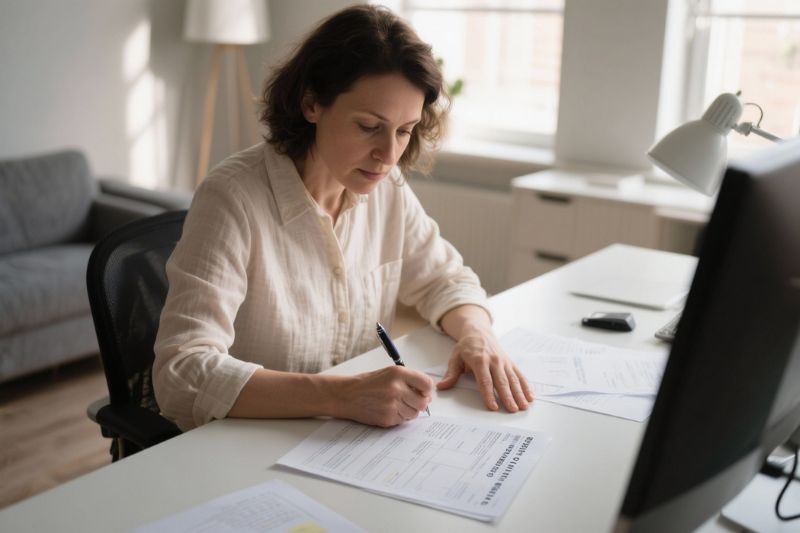
Another essential step in the how to become self-employed in Spain is the Social Security registration. This procedure officially integrates us into the system and is what allows us to contribute and access basic rights such as health care, benefits or future pensions.
Once the activity has been initiated with the tax authorities, we must:
- Register with the Special Regime for Self-Employed Workers (RETA).
- Choose the contribution basis based on our estimated revenues.
- Inform us about discounts or reduced fares available at the start of the activity.
This step often generates doubts because it involves a fixed monthly cost, but it is important to see it for what it is: a form of protection. Quoting is not only an obligation, it is also a way to take care of ourselves in the long term and to give stability to our professional project.
For many people, especially those who are starting from scratch, this is a moment of realisation that being freelance implies responsibility, but also rights. Making the right choice from the outset helps us to balance costs and coverage, avoiding hasty decisions.
Registering correctly with the Social Security is a key piece in ensuring that our self-employment is not fragile, but rather sustainable and supported.
Organising invoices and taxes from the start: avoiding future problems

A fundamental part of how to become self-employed in Spain is to understand that, from the first day, we are responsible for our own tax management. You don't need to know everything, but you do need to be clear about your basic obligations in order to avoid mistakes that can cost you time and money.
As self-employed, we must:
- Issuing invoices correctly, with our fiscal data and those of the client.
- Save all invoices, both in terms of income and expenditure.
- Submit periodic tax returnsas the VAT and the IRPF, as appropriate.
Having a simple system - a binder, a spreadsheet or a digital tool - helps keep this part from becoming overwhelming. Order from the start reduces stress and allows us to focus on the work.
Many people make the mistake of procrastinating. However, the earlier we integrate these habits, the easier it will be to sustain the activity over time. It's not about obsessing, but about create a basic routine that takes care of us.
If at any time we feel that management is slipping away from us, seek to professional support is not a failure, but a form of protecting our stability and that of the project we are building.
Calculating income and expenditure realistically: taking care of month-to-month stability

Understand how to become self-employed in Spain does not end with registration. A key part of the process is learning how to calculate our income and expenditure realistically, without idealising the first months or underestimating the fixed costs.
Like freelancers, We do not earn the same amount every month. That is why it is important:
- To be clear how much we need to earn to cover personal and professional expenses.
- Reserve a part for taxes and contributions, even if it is not yet time to pay them.
- Anticipate weaker months without destabilising the whole project.
This exercise is not meant to discourage us, but rather to avoid surprises. When we know our numbers, we can make decisions more calmly: whether or not to accept a project, adjust prices or look for new opportunities.
Many people fail not for lack of work, but for lack of planning. Being self-employed also means learning to manage uncertainty., And that is done with foresight, not improvisation.
Caring for the professional stability involves looking at the business as a whole, not just as a sum of one-off jobs. And that care starts with understanding how much comes in, how much goes out and what real room we have to grow.
Taking care of ourselves as self-employed: working for ourselves without wearing ourselves out

Learn how to become self-employed in Spain also involves understanding something that is not always said: our body and our time are part of the project. When we are self-employed, it is easy to get the idea that we always have to be available, produce more or accept everything that comes our way.
However, professional stability is not sustained at the cost of exhaustion. Setting schedules, taking breaks and learning to organise your work is just as important as completing the paperwork. Failure to do so can happen invoice, even when the business works.
Taking care of ourselves as self-employed means:
- Setting clear boundaries between work and personal life.
- Recognise when we need to stop or reorganise loads.
- Understand that saying no to certain assignments is also a professional decision.
Especially for migrants, the work freelance can become an avenue for integration and autonomy, but also a source of constant pressure. It is therefore key to remember that the project is us, And if we are careless, everything else suffers.
Being self-employed should not be synonymous with living in permanent tension. Building something of one's own can - and should - also be done with care.
To be autonomous is to build stability with a conscience

Understand how to become self-employed in spain goes far beyond filling in forms or fulfilling obligations. It is a process that involves make informed decisions, and, above all, to take responsibility and, above all, to take care of the project we are building step by step.
Every step well done, every number checked and every limit set on time contributes to a more solid foundation. Being self-reliant does not mean doing everything alone, but learning to organise ourselves, to ask for support when we need it and to move forward with a realistic view of our possibilities.
Professional stability does not come overnight, but it is built with perseverance. And when we put structure to our work, we also gain peace of mind to grow, adapt and project ourselves in the long term.
Taking care of our work is taking care of us
At Curiara, We know that being self-employed is a way of taking control of our professional path, especially when we are building a life in a new country. Being self-employed is a brave gamble, but it must also be a careful one.
We accompany processes that seek stability, clarity and future. Because entrepreneurship is not about launching oneself without a network, it is about create a balance that sustains us as we move forward.
Curiara: supporting roads that are built with effort and care.