

The ETIAS permit will be an important requirement for many people planning to enter the Schengen area in Europe upon its entry into force. If you are organising a trip to Europe, this permit may become that one detail that underpins your whole plan: flights, connections, family visits and entry to Schengen countries.
ETIAS is not a visa, but it will be a prerequisite for many people who today travel visa-free to Europe for short stays. It is therefore important to understand what it is, who it applies to and what practical steps can help you keep your trip on track without last-minute stress..
At Curiara we understand that to migrate or travel is not only to move physically, but also to be present from afar: supporting the family, organising visits, sustaining links and taking care of every detail so that everything goes smoothly.
In this article we will guide you through how to obtain the ETIAS permit without complications, taking care of your documentation as one more gesture of the active care that defines our community. migrant in Europe.
What is ETIAS?

ETIAS means European Travel Information and Authorisation System and will function as a electronic pre-authorisation to enter certain European countries when travelling without a visa for short stays.
It is intended for travellers from visa-exempt countries who can currently enter the Schengen area by fulfilling the conditions of stay, but who in the future will also need to have this authorisation.
As we say, ETIAS is not a visa y does not replace a Schengen visa when your nationality requires it. It is neither a residence permit nor a document that regularises an immigration status. It is simply a pre-boarding and pre-entry travel authorisation filter, linked to your passport.
ETIAS turns your documentation into a checkpoint that you should prepare in advance, just as you check your passport, insurance or travel reservations.
To whom does the permit apply?
ETIAS will apply to nationals of countries that are currently exempt from visa requirements for travel to Europe by tourism, business or visits, and who enter Schengen countries for short stays. In practice, this affects many people from Latin America and from other countries, such as United States, Canada or Australia, who travel visa-free to Europe.
If your trip includes several countries - for example, entering through Spain, continuing through France and exiting through Italy - ETIAS becomes particularly relevant, because entry into the Schengen area is the key moment when all documentation must be in order. This entry is often the real start of the journey: if the permit fails, the whole itinerary can be affected.
Cases in which it may not apply
ETIAS will not be required for those who have citizenship of the European Union, and those travelling with a visa or permit that already covers the entry according to your situation.
In any case, the safest reference for confirming your specific case is always the official information from the EU portal on ETIAS, The assumptions may vary according to status and country.
When does ETIAS start to apply?

The implementation of ETIAS has been postponed and, according to the latest public updates, it is scheduled to be launched in the next two years. last quarter of 2026, with a progressive roll-out and a transition period.
This means that, if you plan to travel to Europe in 2026, it is wise to check the official timetable before buying non-refundable tickets or closing too tight a stopover.
In parallel, the European Union is also preparing the EES (Entry/Exit System), Another entry/exit border control system, different from ETIAS. Although they are different tools, in practice they both form part of the new framework for travel to Europe and make the documentary preparation is even more important in planning.
Which European countries require this permit?

One of the most common questions is in which European countries you will need the ETIAS. The answer is related to the Schengen area, which is a group of European countries that allow free movement among themselves without the need to go through border controls.
If you are travelling to any of the countries that are part of this space, you will need this authorisation once it enters into force.
Therefore, countries requiring ETIAS include most of the Europe's most popular tourist destinationsas Spain, France, Italy, Germany, the Netherlands, Greece, Portugal and Italy.among many others.
In total, there are more than 27 countries within the Schengen area. So if you are planning to visit the major European cities or tourist destinations in these locationsYou will need to apply for this permit before your trip.
It is important to clarify that not all European countries belong to the Schengen area. For example, United Kingdom is not part of the agreement, so if you are travelling to Londonyou will not need the ETIAS (although the The UK has its own immigration requirements).
Nor will you need it if you are going to Irelandwhich is also outside. However, if you then plan to move to other European countries within the space, you will be asked for this authorisation.
To make it clear to you, here are some of the most important countries that will be requiring the ETIAS: Austria, Belgium, Croatia, Czech Republic, Denmark, Estonia, Finland, France, Germany, Greece, Hungary, Iceland, Italy, Latvia, Liechtenstein, Lithuania, Luxembourg, Malta, Netherlands, Norway, Poland, Portugal, Slovakia, Slovenia, Spain, Sweden, Switzerland, Bulgaria, Cyprus and Romania.
How to apply step by step

The ETIAS application is made online through the official website of the European Union. The most important thing here is to avoid intermediaries or sites that look official but overcharge or create confusion.
1) Go to the official website
The recommended starting point is the official EU portal dedicated to ETIAS, where information and access to the application is centralised. Official external link:
If you are preparing a trip from Europe for visiting relatives, the best thing to do is to share with them official links only to reduce errors or misunderstandings.
2) Fill in the form
The application calls for personal data, passport data and also questions related to security and eligibility.
It is important to answer accurately and without over-interpreting. If something does not apply to you, please follow the instructions on the form itself.
A good practice to take care of your travel is to treat this step like when you buy a plane ticket: review, confirm and save vouchers.
3) Pay the fee (if applicable)
The standard application foresees a 20 euro fee, with exemption for under 18 and over 70 years of age. In any case, it is always advisable to confirm the amount and exemptions in the official channel, as this is the valid reference for collection and enforcement.
4) Wait for the decision and save the result
According to the application guidelines, many authorisations are issued quickly, although some may require additional review and take longer.
Therefore, the most prudent recommendation is to apply for ETIAS well in advance, especially if you are travelling in high season or if your itinerary includes tight connections.
When you receive the decision, save the mail and make a note of the identifier or voucher provided, in case you need to refer to it later.
How much does it cost, how long does it last and how many tickets does it allow?

The ETIAS permit provides for a standard fee of 20 euros, which is paid during the application.
As regards its duration, it is described as a valid authorisation up to 3 years or until the expiry of the passport, whichever comes first. In addition, it allows multiple entries for as long as it is in force.
However, it must allow multiple entries does not mean that you can stay indefinitely. The logic of short stays is still marked by the rule of 90 days within any 180-day period for the Schengen area, where applicable.
If you intend to stay longer for study, work or other reasons, ETIAS is not the right way to go and you will need the appropriate permit or visa.
Frequently asked questions on ETIAS

Does ETIAS guarantee entry?
No. The ETIAS permit is a prior travel authorisation, but the final entry decision is taken at the border, in accordance with the applicable rules.
It is therefore also important to comply with the standard conditions of stay, The purpose of the journey, the expected duration or the means available, where appropriate.
Can I apply for ETIAS if I change my passport later?
The authorisation is linked to the passport with which it is applied for. Therefore, if you renew the document later, you will probably have to arrange a new authorisation for the new passport.
To avoid problems, if you know that you will have to renew soon, the most sensible thing to do is to renew your passport first and then start the application.
When should I apply to be safe?
As a general rule, many applications are processed quickly, but some may take longer due to additional reviews.
If you want to protect your travel plans - tickets, holidays, family visits or work commitments - the prudent thing to do is to order it with a margin and not leave it for the same week of the trip.
Common mistakes when applying (and how to avoid them)
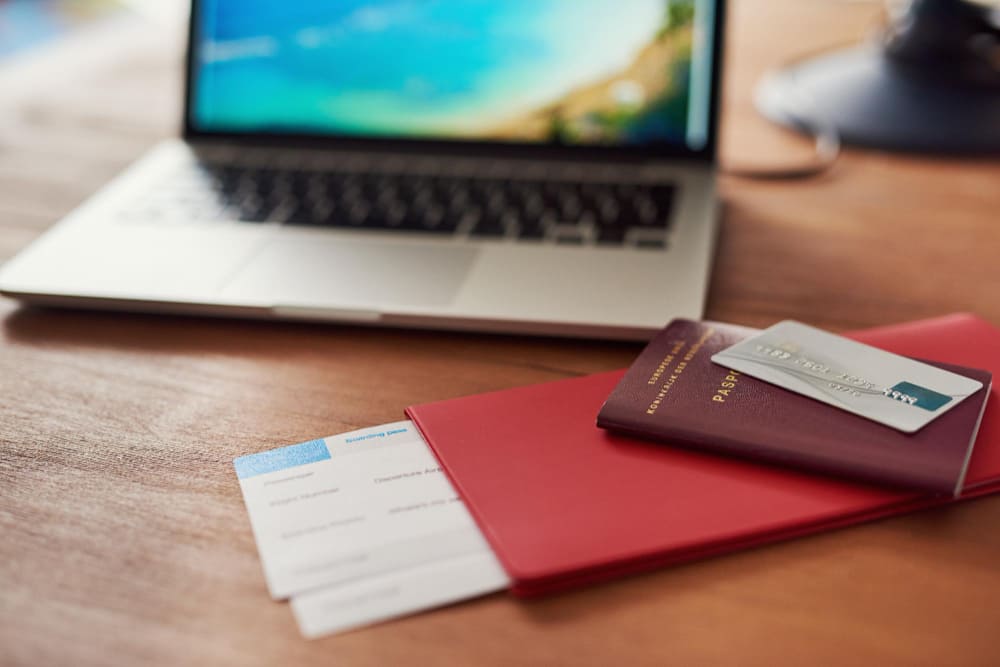
A trip to Europe can be complicated for many reasons, but there are recurring mistakes that should be prevented from the outset.
In ETIAS processing, these are some of the most common:
- Passport about to expireif the document expires soon, the authorisation may be limited or may not fit the actual date of your travel.
- Entering the passport number incorrectlyA single incorrect digit can invalidate the electronic link between ETIAS and your document.
- Applying too lateWhile many decisions are quick, some require additional review, so asking for a margin is a straightforward way to take care of your itinerary.
- Relying on unofficial sitesThe official EU channel is the one you should use both for information and for submitting the application, thus avoiding extra charges or confusing information.
The idea is simple: it is not a question of doing more formalities than necessary, but of doing the important ones well. so that you don't have any problems during your trip.